
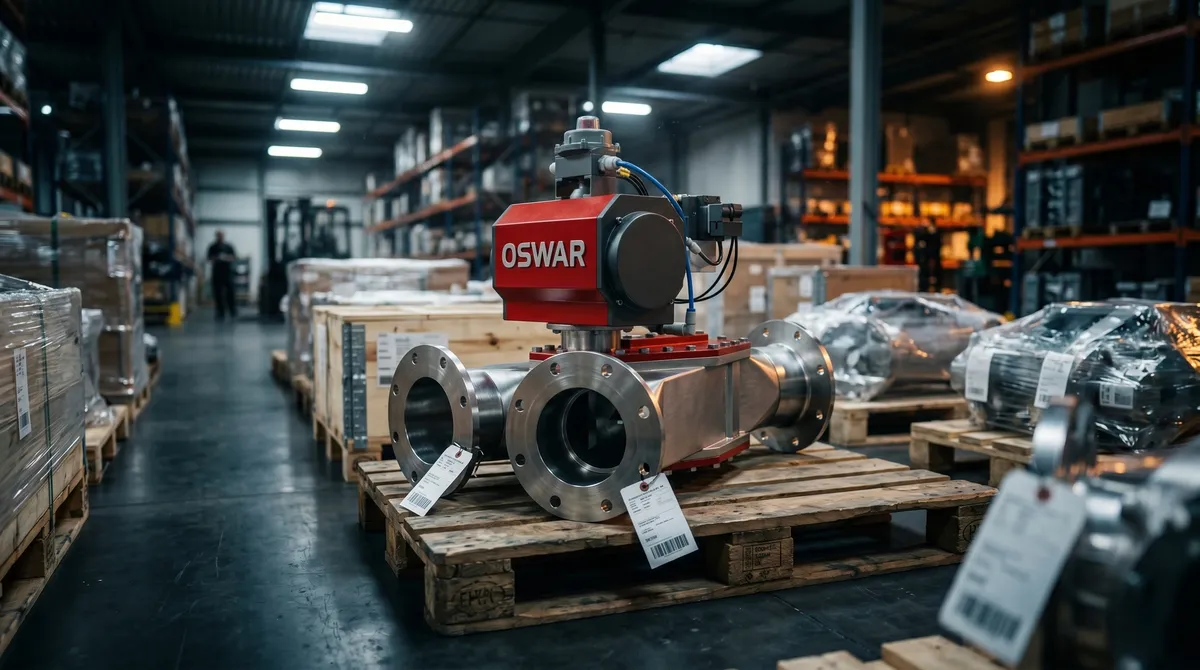
In the world of industrial flow control, the diverter valve stands as a critical component that many factory owners and plant managers rely on daily.
Whether you're running a water treatment facility in Chennai or managing a pharmaceutical plant in Hyderabad, understanding these valves can make a significant difference in your operations.
A diverter valve is essentially a specialized valve that redirects the flow of liquids, gases, or even solid materials from one path to another. Think of it as a traffic controller for industrial fluids - it decides which way your materials should go within your piping system. For Indian industries dealing with everything from water management to chemical processing, these valves have become indispensable tools for efficient operations.
The beauty of an industrial diverter valve lies in its versatility. From small plumbing setups to massive industrial complexes, these valves handle multiple tasks with remarkable efficiency. They help save costs, reduce waste, and improve overall plant productivity - three factors that every Indian business owner values deeply.
How Does a Diverter Valve Work?
Understanding the diverter valve working principle doesn't require an engineering degree. At its core, this valve operates on a simple concept.
Inside the valve body, there's a movable element - usually a ball, plug, or disc. When you need to change the flow direction, this element rotates or slides to block one path while opening another. The movement can be manual, pneumatic, or electric, depending on your specific needs.
Here's the step-by-step process:
Input Flow: Material enters through the inlet port
Direction Control: The internal element positions itself based on your command
Output Routing: Flow exits through the selected outlet port
Sealing Action: The valve ensures no leakage between ports
For instance, in a Mumbai-based food processing unit, a 3-way diverter valve might direct milk flow between pasteurization tanks and packaging lines, all controlled by a simple lever or automated system.
Types of Diverter Valves
Understanding types of diverter valves helps you choose the right one for your specific application. Let's explore the main categories:
1. 3-Way Diverter Valves
The most common type in Indian industries, these valves have one inlet and two outlets (or vice versa). They're perfect for applications where you need to split or combine flows.
2. 4-Way Diverter Valves
These advanced valves feature two inlets and two outlets, allowing for more complex flow patterns. Chemical plants in Gujarat often use these for mixing different chemicals safely.
3. Multi-Port Diverter Valves
With more than four ports, these valves handle complex routing requirements. Large refineries and petrochemical plants frequently employ these sophisticated systems.
4. Material-Specific Types
Water Diverter Valve: Designed for water treatment and distribution
Air Diverter Valve: Specialized for pneumatic systems and HVAC applications
Powder Diverter Valve: Built for handling dry bulk materials
Comparison Table: Types of Diverter Valves
Type | Ports | Best For | Common Industries | Price Range |
3-Way | 3 | Simple routing | Water treatment, HVAC | ₹5,000 - ₹50,000 |
4-Way | 4 | Complex mixing | Chemical, Pharma | ₹15,000 - ₹1,00,000 |
Multi-Port | 5+ | Multiple routing | Oil & Gas, Refining | ₹50,000 - ₹5,00,000 |
Rotary | 3-6 | Continuous operation | Food, Cement | ₹20,000 - ₹2,00,000 |
Industrial Applications and Uses
The diverter valve uses span across numerous industries in India. Let's examine some real-world applications:
Water Treatment Plants
In Delhi's water treatment facilities, water diverter valves manage the flow between filtration stages, chemical dosing points, and storage tanks. These valves ensure clean water reaches millions of homes efficiently.
Food and Beverage Industry
Amul's dairy plants use industrial diverter valves to route milk between different processing lines. The valves maintain hygiene standards while maximizing production efficiency.
Pharmaceutical Manufacturing
Companies like Cipla and Dr. Reddy's rely on sanitary diverter valves to handle sensitive drug formulations. These valves prevent cross-contamination between different medicine batches.
Chemical Processing
GAIL's petrochemical complexes employ specialized diverter valves to handle corrosive chemicals safely. The valves' material selection becomes crucial here - often using stainless steel or special alloys.
HVAC Systems
Modern office buildings and malls use air diverter valves to control airflow between different zones, ensuring optimal temperature control and energy efficiency.
Material Comparison for Industrial Applications
Material | Temperature Range | Chemical Resistance | Cost | Typical Use |
Cast Iron | -20°C to 200°C | Moderate | Low | Water systems |
Stainless Steel 316 | -50°C to 400°C | Excellent | High | Food, Pharma |
PVC | 0°C to 60°C | Good | Very Low | Water treatment |
Brass | -20°C to 180°C | Good | Medium | HVAC, Plumbing |
Hastelloy | -100°C to 500°C | Superior | Very High | Chemical plants |
Advantages of Using Diverter Valves
Industrial valves India markets have embraced diverter valves for several compelling reasons:
Cost Efficiency
Reduces need for multiple pipelines
Minimizes installation expenses
Lowers maintenance costs
Space Saving
Compact design fits tight spaces
Eliminates complex piping arrangements
Ideal for retrofitting existing systems
Operational Flexibility
Quick flow direction changes
Easy automation integration
Supports batch processing
Safety Enhancement
Prevents backflow contamination
Enables emergency diversion
Reduces manual handling risks
Disadvantages to Consider
While diverter valves offer numerous benefits, understanding their limitations helps make informed decisions:
Pressure Drop: Some designs cause significant pressure loss
Wear and Tear: Moving parts require regular maintenance
Limited Flow Capacity: May restrict flow compared to straight pipes
Initial Cost: Quality valves require substantial investment
Maintenance Tips for Long-Lasting Performance
Proper maintenance ensures your diverter valve operates efficiently for years:
Regular Inspection Schedule
Check for leaks monthly
Inspect seals quarterly
Test actuator function weekly
Cleaning Procedures
Flush lines before maintenance
Use appropriate cleaning agents
Avoid abrasive materials on sealing surfaces
Document cleaning dates
Preventive Measures
Lubricate moving parts as per manufacturer guidelines
Replace worn seals promptly
Keep spare parts inventory
Train operators properly
Factors to Consider Before Buying
Selecting the right industrial diverter valve requires careful evaluation:
Application Requirements
Flow rate and pressure ratings
Temperature extremes
Chemical compatibility
Hygiene standards
Operational Needs
Manual vs. automated control
Frequency of direction changes
Integration with existing systems
Future expansion plans
Budget Considerations
Initial purchase cost
Installation expenses
Long-term maintenance
Energy efficiency
Buying Guide: Key Selection Criteria
Factor | Questions to Ask | Why It Matters |
Size | What's your pipe diameter? | Ensures proper fit |
Pressure | Maximum operating pressure? | Prevents valve failure |
Temperature | Operating temperature range? | Material selection |
Media | What flows through it? | Chemical compatibility |
Control | Manual or automated? | Operational efficiency |
Standards | ISI/ISO requirements? | Regulatory compliance |
Frequently Asked Questions
1. What is the difference between a diverter valve and a selector valve?
A diverter valve splits one flow into multiple paths, while a selector valve combines multiple inputs into one output. Both are types of multi-port valves but serve opposite functions in your piping system.
2. Can diverter valves handle high-pressure applications?
Yes, many industrial diverter valves are designed for high-pressure service. However, you must select the right pressure rating. For instance, oil refineries often use valves rated up to 150 bar or higher.
3. How often should I replace my diverter valve?
With proper maintenance, a quality diverter valve from Oswar Rotocorp can last 10-15 years. However, harsh chemicals or extreme temperatures may reduce lifespan to 5-7 years.
4. What causes diverter valve failure?
Common causes include worn seals, corrosion, debris buildup, and improper operation. Regular maintenance prevents most failures. Indian industries operating in dusty environments should pay extra attention to seal integrity.
5. Are pneumatic diverter valves better than manual ones?
Pneumatic valves offer faster operation and remote control capabilities, making them ideal for automated plants. Manual valves work well for applications requiring infrequent direction changes and where compressed air isn't available.
6. Can one diverter valve replace multiple standard valves?
Absolutely! A single 3-way diverter valve can replace two or three standard valves in many applications, saving space and reducing leak points in your system.
7. What certifications should I look for when buying diverter valves in India?
Look for ISI marks, ISO 9001 certification, and industry-specific approvals like FDA for food applications or API for petroleum industry use.
8. How do I size a diverter valve correctly?
Sizing depends on flow rate, pressure drop tolerance, and pipe dimensions. Consult with diverter valve manufacturers in India who can provide sizing calculations based on your specific requirements.
9. Can Oswar Rotocorp customize diverter valves for special applications?
Oswar Rotocorp specializes in customized valve solutions for unique industrial requirements, offering modifications in materials, connections, and actuation methods to suit specific needs.
10. What's the typical delivery time for industrial diverter valves in India?
Standard valves are usually available within 2-3 weeks. Custom designs may take 6-8 weeks depending on complexity and material availability.
Your Path to Optimal Flow Control Solutions
Choosing the right diverter valve transforms your industrial operations from good to exceptional. Whether you're upgrading a water treatment plant in Bangalore or setting up a new pharmaceutical facility in Ahmedabad, these valves prove their worth through improved efficiency and reduced operational costs.
The Indian industrial landscape continues evolving, and flow control technology advances alongside it. Modern industrial valves India markets offer sophisticated solutions that weren't available even five years ago. Smart valves with IoT integration, self-cleaning mechanisms, and predictive maintenance features are becoming increasingly common.
For businesses serious about optimizing their flow control systems, partnering with experienced diverter valve manufacturers in India makes all the difference. Oswar Rotocorp brings decades of expertise in designing and manufacturing industrial valve solutions tailored to Indian conditions and requirements. Our team understands the unique challenges faced by local industries - from monsoon-related issues to extreme temperature variations across different regions.
Ready to enhance your industrial flow control? Contact us at Oswar Rotocorp to discuss how our comprehensive range of diverter valves can streamline your operations and boost productivity. Our technical experts are always ready to help you find the perfect valve solution for your specific needs.
