

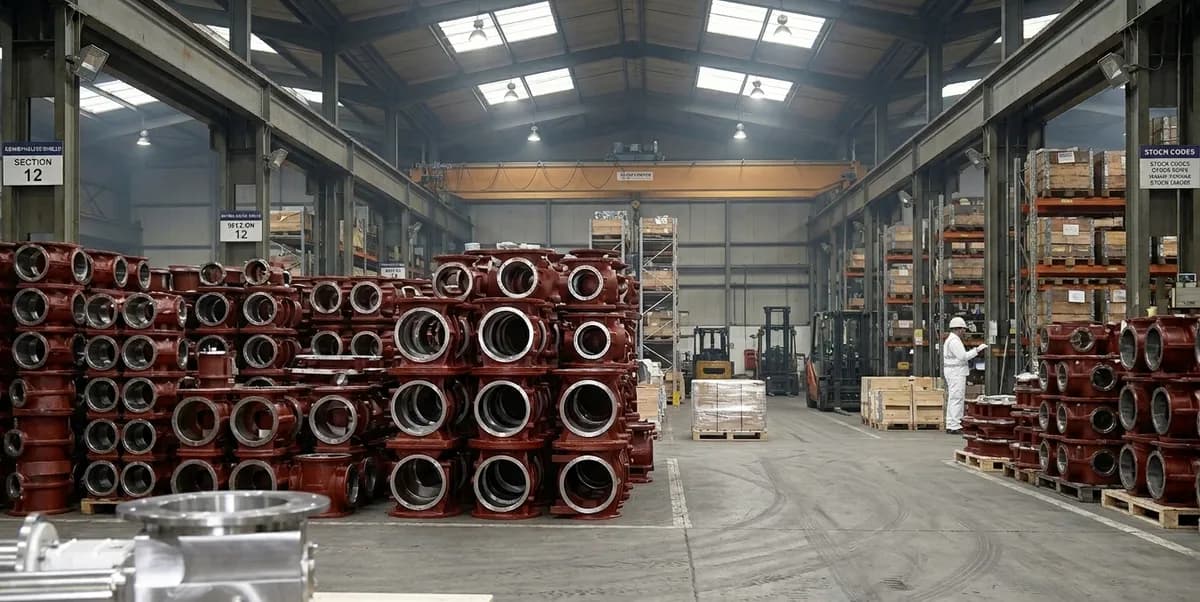
If you've ever wondered how factories move powders, grains, or small materials from one place to another without letting air escape or dust fly everywhere, the answer lies in a clever device called a rotary airlock valve. Think of it like a revolving door at a hotel entrance – it lets people (or in this case, materials) pass through while keeping the inside and outside air separate.
A rotary feeder valve works using a simple but brilliant design. Inside a round metal housing, there's a rotating star-shaped rotor with pockets. As the rotor turns, these pockets fill with material at the top, rotate around, and drop the material at the bottom. Meanwhile, the tight fit between the rotor and housing creates an air seal, preventing air from flowing between different pressure zones.
Industries across India rely on these industrial rotary valves for several critical reasons:
- Dust Control: They prevent harmful dust from escaping into the workplace
- Pressure Management: They maintain different air pressures in connected systems
- Continuous Flow: They ensure steady material movement without interruptions
- Safety: They prevent dangerous backflow of gases or materials
- Efficiency: They reduce material waste and energy consumption
Choosing the right rotary airlock valve manufacturer isn't just about buying equipment – it's about securing your plant's productivity, worker safety, and long-term profitability. A poorly made valve can lead to frequent breakdowns, material leakage, excessive maintenance costs, and even safety hazards that could shut down your operations.
Understanding Different Types of Rotary Airlock Valves
Standard Drop-Through Valves
These are the workhorses of the industry. Material enters from the top and exits straight down. They're perfect for free-flowing materials like plastic pellets or grains.
Blow-Through Valves
These valves have a special side inlet for compressed air that helps push sticky or difficult materials through the system. Food processing plants often use these for ingredients that tend to clump together.
Side Entry Valves
Instead of dropping material straight down, these valves accept material from the side. They're ideal when you have limited vertical space in your facility.
How to Select the Right Rotary Airlock Valve for Your Needs
Selecting the perfect rotary airlock valve for your application requires understanding several key factors. Let's break down the how to select rotary airlock valve process into simple steps:
1. Material Characteristics
First, consider what you're moving:
- Particle Size: Fine powders need tighter tolerances than large pellets
- Abrasiveness: Cement or minerals require hardened components
- Temperature: Hot materials need special seals and materials
- Moisture Content: Wet materials might need special coatings
2. Operating Conditions
Think about your specific environment:
- Pressure Differential: How much pressure difference exists between inlet and outlet?
- Temperature Range: Will the valve handle hot or cold materials?
- Continuous vs. Batch Operation: How many hours per day will it run?
3. Capacity Requirements
This brings us to an important topic – rotary airlock valve capacity calculation.
Simple Guide to Rotary Airlock Valve Capacity Calculation
Don't worry – calculating capacity is easier than it sounds! Here's a simple formula that anyone can understand:
Capacity (kg/hr)=Pocket Volume×Number of Pockets×RPM×60×Bulk Density×Fill Efficiency
Let's use a real example:
- Pocket Volume: 2 liters
- Number of Pockets: 8
- Rotor Speed: 20 RPM
- Bulk Density of Material: 0.8 kg/liter (like wheat flour)
- Fill Efficiency: 85% (pockets don't fill 100%)
Calculation
2×8×20×60×0.8×0.85=13056 kg/hr
That's about 13 tons per hour! This rotary airlock valve capacity calculation helps you choose the right size valve for your needs.
4. Construction Materials
Different applications need different materials:
Application | Recommended Material | Why? |
Food Processing | Stainless Steel 316 | Hygiene and corrosion resistance |
Cement Industry | Hardened Steel | Handles abrasive materials |
Chemical Plants | Special Alloys | Resists chemical reactions |
Plastics Industry | Cast Iron with Chrome Plating | Cost-effective and durable |
Industries That Depend on Rotary Feeder Valves
Industrial rotary valves serve as the backbone of material handling across numerous sectors:
Cement and Construction Materials
Heavy duty rotary airlock valves in cement plants handle highly abrasive materials like clinker, limestone, and finished cement. These valves must withstand extreme wear while maintaining precise airlock seals to prevent dust emissions.
Food and Beverage Processing
From flour mills to snack food factories, rotary feeder manufacturer products ensure hygienic material transfer. These valves handle everything from sugar and spices to coffee beans and breakfast cereals.
Pharmaceutical Manufacturing
The pharma industry requires airlock valves for powder handling systems that meet strict cleanliness standards. These valves prevent cross-contamination while handling active pharmaceutical ingredients and excipients.
Chemical Processing
Chemical plants use specialized industrial flow control solutions to handle corrosive materials, maintain precise dosing, and ensure worker safety by preventing toxic material exposure.
Plastics and Polymers
The plastics industry relies on bulk material handling equipment to move plastic pellets, powders, and additives through various processing stages without material degradation.
Leading Features to Look for in Quality Rotary Valves
When evaluating a rotary airlock valve supplier, look for these essential features:
Advanced Sealing Technology
- Adjustable rotor-to-housing clearances
- Special seal arrangements for fine powders
- Temperature-resistant sealing materials
Robust Construction
- Reinforced bearing supports
- Heavy-duty drive systems
- Wear-resistant internal coatings
Safety Features
- Pressure relief vents
- Shear pin protection
- ATEX certification for explosive environments
Maintenance-Friendly Design
- Quick-access cleaning ports
- Easy rotor removal
- Standard replacement parts
Comparing Top Rotary Airlock Valve Manufacturers in India
Here's what to consider when choosing your rotary airlock valve manufacturer in India:
Criteria | What to Look For | Why It Matters |
Experience | 10+ years in industry | Proven track record and reliability |
Manufacturing Facility | Modern equipment and quality control | Ensures precision and consistency |
Customization | Ability to modify designs | Meets specific application needs |
After-Sales Support | Local service network | Minimizes downtime |
Certifications | ISO, CE marking | Confirms quality standards |
Client References | Similar industry experience | Validates expertise |
Maintenance Tips for Long-Lasting Performance
Proper maintenance ensures your rotary feeder valve operates efficiently for years:
Daily Checks
- Listen for unusual noises
- Check for material leakage
- Monitor drive motor temperature
Weekly Maintenance
- Inspect rotor clearances
- Check bearing lubrication
- Clean inspection ports
Monthly Tasks
- Verify rotor-to-housing gaps
- Test safety devices
- Review operating parameters
Annual Overhaul
- Replace worn seals
- Recondition rotor vanes
- Update spare parts inventory
Common Challenges and Solutions
Problem: Material Buildup
Solution: Choose valves with self-cleaning rotors or air purge systems
Problem: Excessive Wear
Solution: Select hardened materials or replaceable wear liners
Problem: Air Leakage
Solution: Opt for precision-machined components with minimal clearances
Problem: Inconsistent Flow
Solution: Ensure proper valve sizing and rotor speed selection
Frequently Asked Questions
Q1: What is the difference between a rotary airlock valve and a rotary feeder?
A: They're essentially the same device! The term "airlock" emphasizes the sealing function, while "feeder" highlights the material handling aspect. Most rotary feeder manufacturer companies use these terms interchangeably.
Q2: How much does a rotary airlock valve cost in India?
A: Prices vary widely based on size, material, and features. Small cast iron valves might start around ₹50,000, while large stainless steel units for pharmaceutical use can exceed ₹5,00,000.
Q3: Can rotary valves handle hot materials?
A: Yes! Special high-temperature designs can handle materials up to 400°C or more. The key is choosing the right seals and allowing for thermal expansion.
Q4: How often should I replace the rotor in my airlock valve?
A: It depends on your application. With abrasive materials like cement, you might need replacement every 2-3 years. For gentle materials in food processing, rotors can last 10+ years.
Q5: What's the ideal rotor speed for my application?
A: Typical speeds range from 10-40 RPM. Faster speeds increase capacity but can cause material degradation. Consult your rotary airlock valve supplier for optimal settings.
Q6: Do I need a variable speed drive?
A: Variable speed drives offer flexibility for changing production rates and can help optimize power consumption. They're especially useful in batch processing operations.
Q7: How do I prevent material bridging in the valve?
A: Choose the right rotor design (closed-end rotors work well), ensure proper inlet design, and consider vibrators or air injection systems for difficult materials.
Q8: What safety certifications should I look for?
A: Look for ATEX certification for explosive environments, CE marking for European standards, and specific food-grade certifications for food processing applications.
Q9: Can one valve handle multiple materials?
A: Yes, but consider cross-contamination risks. Quick-clean designs and proper procedures between material changes are essential.
Q10: How do I calculate the pressure rating needed?
A: Consider your maximum system pressure plus a safety factor of at least 1.5. Most standard valves handle up to 1 bar differential pressure.
Making the Smart Choice for Your Industrial Success
Selecting the right rotary airlock valve manufacturer in India is more than a purchasing decision – it's an investment in your facility's efficiency, safety, and profitability. The right partner provides not just equipment, but ongoing support, customization capabilities, and industry expertise that helps your business thrive.
Whether you're handling fine pharmaceutical powders, abrasive cement, or food ingredients, the principles remain the same: choose quality construction, proper sizing, and reliable support.
For businesses seeking dependable bulk material handling equipment and industrial flow control solutions, companies like Oswar Rotocorp have established themselves as trusted names in the Indian market, offering comprehensive solutions backed by years of experience and technical expertise.
Ready to optimize your material handling processes? Contact us today to discuss how the right rotary feeder valve solution can transform your operations and deliver lasting value to your business.
