

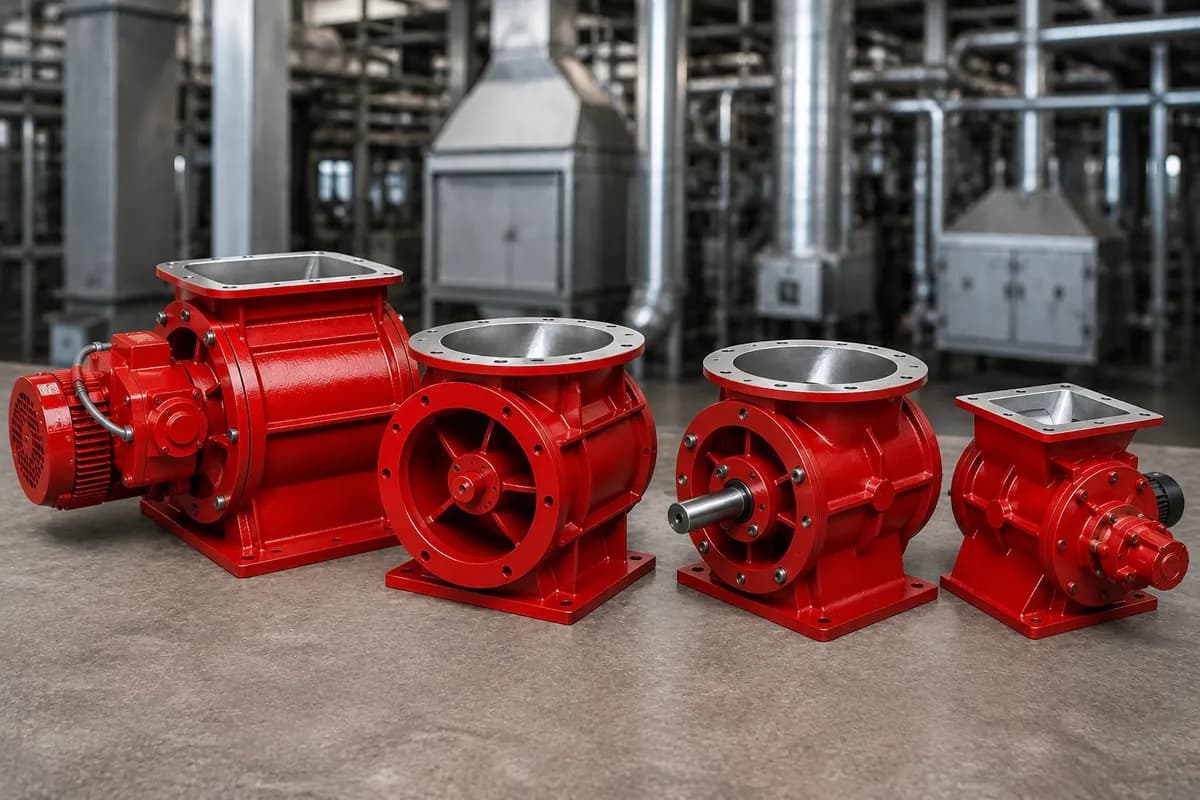
When your production line stops because powder won't flow properly, or when dust escapes your pneumatic system, the problem often traces back to one critical component – your rotary valve. In Indian industries, from cement plants in Gujarat to food processing units in Punjab, choosing the wrong rotary valve can cost thousands of rupees in lost production time and material waste.
A rotary valve acts like a gatekeeper for your bulk materials. It controls the flow of powders, granules, and pellets while maintaining an airtight seal in your system. Think of it as the heart of your Bulk Material Handling Equipment – when it fails, everything stops working.
The challenge? India's diverse industrial landscape demands different solutions. A Heavy Duty Rotary Valve perfect for a cement plant in Rajasthan won't work for a pharmaceutical company in Hyderabad that needs strict hygiene standards. Understanding Rotary Valve Types isn't just technical knowledge – it's the key to keeping your operations running smoothly and profitably.
What Are Rotary Valves and How Do They Work?
A Rotary Airlock Valve is essentially a rotating cylinder with pockets that carry material from one chamber to another while preventing air leakage. The Rotary Valve Working Principle is simple: as the rotor turns, material falls into pockets on the top, gets carried around, and drops out at the bottom.
The magic happens in the tight clearances between the rotor and housing. These small gaps (typically 0.1-0.3mm) create an airlock that prevents pressure differences from affecting your system. This is why they're also called Industrial Airlock Valve units.
Main Rotary Valve Types Used in Indian Industries
For industries looking for reliable performance across different applications, the RALX Series Rotary Valves from Oswar Rotocorp are engineered to deliver consistent material flow, excellent air sealing, and long service life. Available in multiple sizes and configurations, the RALX Series is suitable for cement, chemical, food processing, pharmaceutical, and mineral handling applications.
Blow Through Rotary Valve
A Blow Through Rotary Valve handles positive pressure systems where air pushes material through. The rotor design includes special features to prevent back-flow.
Ideal Indian Use Cases:
- Pneumatic Conveying Rotary Valve applications in cement plants
- Chemical powder handling in Gujarat's industrial belt
- Mineral processing units in Odisha
- Food ingredient dosing systems
Food Grade Rotary Valve
Food Grade Rotary Valve units meet strict hygiene standards required by India's growing food processing sector.
Special Features:
- Stainless Steel Rotary Valve construction (SS 304/316)
- FDA approved seals and gaskets
- Easy clean surfaces
- Sanitary design
Perfect for:
- Spice processing units in Kerala
- Dairy powder handling in Gujarat
- Biscuit manufacturing in Karnataka
- Tea processing facilities in Assam
Rotary Valve Types Comparison Table
Valve Type | Pressure Range | Material Suitability | Industries | Maintenance Level |
RALX Series | Up to 3 bar (application dependent) | Powders, Granules, Pellets | Cement, Chemicals, Food, Minerals | Medium |
Blow Through | Up to 2 bar | All powder types | Cement, Chemicals | Medium |
Food Grade | Atmospheric to 1.5 bar | Food materials | Food Processing | High |
Heavy Duty | Up to 3 bar | Abrasive materials | Mining, Cement | High |
How to Choose the Right Industrial Rotary Valve
Material Characteristics Matter Most
Your material properties determine which Rotary Valve Types will work best.
For Abrasive Materials (like sand or cement):
- Choose hard faced rotors
- Consider Heavy Duty Rotary Valve options
- Look for replaceable wear parts
For Sticky Materials (like sugar or starch):
- Select open rotor designs
- Avoid tight clearances
- Consider heated housing options
For Light, Fluffy Powders (like flour or cocoa):
- Use closed rotor designs
- Ensure good sealing
- Consider blow through configuration
Temperature and Pressure Requirements
Indian industries face extreme conditions. A Rotary Valve for Cement Plant operations might handle 200°C temperatures, while food applications need ambient temperature control.
High Temperature Applications:
- Cement clinker handling
- Hot plastic pellets
- Dried chemical products
High Pressure Applications:
- Dense phase pneumatic conveying
- Pressure vessel discharge
- Silo unloading systems
Why Choose Oswar Rotocorp for Industrial Rotary Valves in India
When selecting a Rotary Valve Manufacturer in India, experience in local conditions matters. Indian industries face unique challenges – from monsoon humidity in coastal plants to desert heat in Rajasthan's cement facilities.
The company's RALX Series Rotary Valves are designed for dependable performance in demanding industrial environments. With precision engineering, durable construction, and options for different pressure and material handling requirements, the RALX Series is a preferred choice for businesses looking for efficient and long lasting rotary valve solutions.
Key Advantages:
- Local manufacturing reduces Rotary Valve Price in India
- Fast spare parts availability
- Understanding of Indian material properties
- Compliance with local quality standards
Rotary Valve Selection Guide Checklist
Selection Factor | Questions to Ask | Impact on Choice |
Material Type | Is it abrasive? Sticky? Corrosive? | Determines rotor and housing materials |
Flow Rate | How much material per hour? | Sets valve size and speed |
Pressure Differential | What's the pressure difference? | Affects sealing requirements |
Temperature | Operating temperature range? | Influences material selection |
Hygiene Requirements | Food contact? Cleanability needs? | Determines surface finish and design |
Budget Constraints | Initial cost vs. lifecycle cost? | Balances features with affordability |
Rotary Valve Applications Across Indian Industries
Cement Industry
- Clinker handling at high temperatures
- Fly ash processing
- Raw material feeding
- Dust collection systems
Food Processing
- Flour dosing in bakeries
- Spice powder handling
- Sugar crystal conveying
- Grain processing
Chemical Plants
- Catalyst handling
- Powder mixing operations
- Reactor feeding
- Product packaging
Pharmaceutical Manufacturing
- API powder handling
- Tablet coating materials
- Sterile powder processing
- Containment applications
Rotary Valve Maintenance Best Practices
Proper maintenance keeps your Powder Handling Equipment running efficiently.
Daily Checks
- Visual inspection for leaks
- Listen for unusual noises
- Check rotation smoothness
Weekly Maintenance
- Lubricate bearings
- Check rotor clearances
- Inspect seals and gaskets
Monthly Tasks
- Measure wear on rotor tips
- Check drive coupling alignment
- Clean accumulated material
Frequently Asked Questions About Rotary Valve Types
Q: What is the difference between a rotary valve and rotary feeder?
A: Rotary Feeder is another name for rotary valve. Both terms describe the same equipment that controls material flow while providing an airlock seal.
Q: How much does a rotary valve cost in India?
A: Rotary Valve Price in India varies from ₹25,000 for small food-grade units to ₹5 lakhs for large heavy-duty valves. Factors include size, materials, and special features.
Q: Which rotary valve is best for cement plants?
A: Cement plants typically need Heavy Duty Rotary Valve units with hard-faced rotors, high-temperature capability, and robust construction to handle abrasive clinker.
Q: Can rotary valves handle sticky materials?
A: Yes, but you need specific designs. Open rotor configurations with larger clearances work better for sticky materials than tight-clearance designs.
Q: What maintenance is required for rotary valves?
A: Rotary Valve Maintenance includes regular lubrication, clearance checks, and rotor tip inspection. Food-grade valves need additional cleaning procedures.
Q: How do I size a rotary valve correctly?
A: Sizing depends on material flow rate, bulk density, and system pressure. A qualified Rotary Valve Manufacturer in India like Oswar Rotocorp can help with proper calculations.
Q: What materials are rotary valve rotors made from?
A: Common materials include carbon steel, stainless steel, and hard-faced options. Stainless Steel Rotary Valve rotors are standard for food and pharmaceutical applications.
Q: Can rotary valves work with pneumatic conveying systems?
A: Absolutely. Pneumatic Conveying Rotary Valve units are specifically designed to handle the pressure differentials in these systems.
Q: What's the typical lifespan of a rotary valve?
A: With proper maintenance, industrial rotary valves last 5-15 years. Lifespan depends on material abrasiveness, operating conditions, and maintenance quality.
Q: Are custom rotary valves available for specific applications?
A: Yes, manufacturers like Oswar Rotocorp offer custom solutions for unique applications, including special materials, sizes, and configurations.
Choosing the Right Rotary Valve Starts with the Right Partner
Selecting the correct Rotary Valve Types for your Indian industrial application requires understanding both your process needs and equipment capabilities. The right valve improves efficiency, reduces maintenance costs, and prevents costly production downtime.
Success comes from partnering with experienced suppliers who understand Indian industrial conditions. Oswar Rotocorp's three decades of experience in manufacturing Industrial Rotary Valve solutions across India provides the expertise needed to make the right choice for your application.
Whether you need a RALX Series Rotary Valve, a Blow Through Rotary Valve, or a Food Grade Rotary Valve, the key is selecting the right solution based on your material, process conditions, and operational requirements.
