

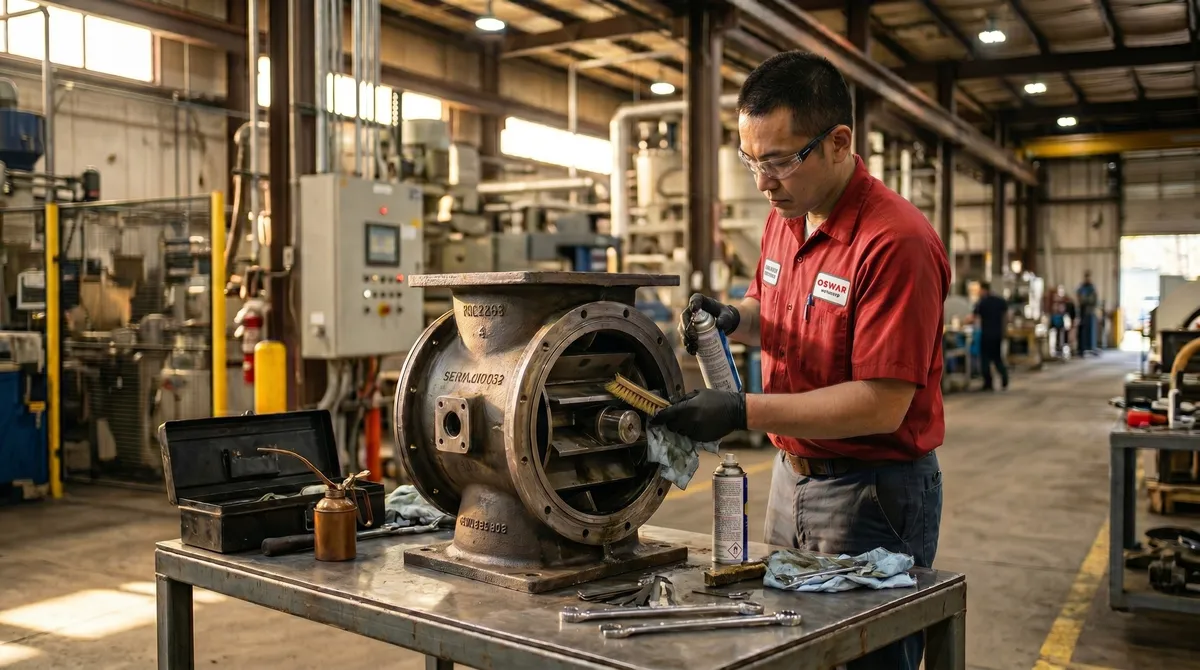
In a cement plant, material flow must be steady, safe, and accurate. If one part of the process slows down, the whole line can suffer. That is why the Rotary Valve for Cement Plant in India plays such an important role. It helps move powdered and granular materials smoothly from one stage to another without much dust leakage or air loss.
For Indian cement plants, this matters even more because production runs are often heavy, continuous, and under tough site conditions. A good rotary valve improves material handling, reduces blockage, controls airflow, and supports better plant efficiency. It also helps plant owners, procurement teams, and maintenance engineers reduce downtime and keep operations stable.
Whether you are looking for a rotary airlock valve for a cement plant, a rotary feeder valve, or a heavy duty rotary valve, the right choice can make a big difference in performance and cost. This guide explains everything in simple English.
What Is a Rotary Valve?
A rotary valve is a machine used to control the flow of dry bulk material. It has a rotating wheel with pockets. As the wheel turns, material enters the pockets from the top and is discharged from the bottom.
In simple words, it works like a controlled gate for powders and granules.
In cement plants, a cement plant rotary valve is often used to move:
Cement powder
Fly ash
Limestone powder
Coal dust
Raw meal
Kiln feed materials
It also helps separate air pressure between two process points. That is why it is also called an airlock valve for cement industry use.
How Rotary Valves Work in Cement Plants
A rotary airlock valve works through a simple rotating action.
Basic working process
Material falls into the valve from the hopper or bin.
The rotor turns inside the housing.
Pockets in the rotor carry material forward.
Material is released at the outlet side.
At the same time, air leakage is controlled.
This is useful in cement plants because many systems use pneumatic conveying. Without proper airlock control, pressure and dust can create problems.
Why this matters
Keeps material flow steady
Helps prevent air backflow
Reduces dust escape
Supports smooth feeding into silos, conveyors, or mixers
A well-designed industrial rotary valve manufacturer in India will build the valve to handle high load, abrasive material, and long working hours.
Rotary Valve Uses in Cement Plant
The rotary valve uses in cement plant are wide and practical. It is used in many sections of the production line.
Major uses include
Feeding raw meal into process equipment
Discharging material from silos and bins
Airlock control in pneumatic conveying lines
Feeding cement powder to packing systems
Handling fly ash and additives
Dust collection and filtration systems
Controlling material flow from hoppers
Managing fine powders in blending units
Common plant areas where rotary valves are used
Plant Section | Purpose of Rotary Valve |
Raw material handling | Controls flow of powders and bulk solids |
Kiln feed system | Feeds material evenly |
Cement mill outlet | Transfers fine cement safely |
Pneumatic conveying | Acts as airlock |
Bag filter/dust collector | Discharges dust collected from air system |
Packing plant | Supports controlled feeding |
For Indian factories, the Rotary Valve for Cement Plant in India must be strong, reliable, and able to work in dusty, hot, and heavy-duty conditions.
Types of Rotary Valves Used in Cement Plants
Different jobs need different valve types. Choosing the right one improves life and performance.
1. Standard rotary valve
Used for normal material flow in many cement handling points.
2. Heavy duty rotary valve
Built for abrasive material, continuous use, and tough plant conditions.
3. Rotary airlock valve
Best for pressure sealing and air control in pneumatic conveying systems.
4. Rotary feeder valve
Used when controlled feeding is needed at a steady rate.
5. Blow-through valve
Used in some conveying applications where air passes through the valve.
6. Drop-through valve
Material enters from the top and drops out from the bottom.
Comparison table
Type | Best For | Main Advantage |
Standard rotary valve | General bulk material handling | Simple and cost-effective |
Heavy duty rotary valve | Cement, fly ash, abrasive powders | Better wear life |
Rotary airlock valve | Pneumatic conveying | Good air sealing |
Rotary feeder valve | Controlled feeding | Smooth material discharge |
Blow-through valve | Air-assisted transfer | Better conveying support |
Drop-through valve | Gravity discharge | Easy material flow |
Key Benefits of Rotary Valve for Cement Plant in India
A good rotary valve gives many practical benefits to cement plant owners and technical teams.
1. Smooth material flow
It keeps material moving without sudden blockages.
2. Better air sealing
This is very important in pneumatic systems and dust control.
3. Less material waste
Good sealing reduces leakage and spillage.
4. Improved plant efficiency
When flow is steady, machines work better and downtime reduces.
5. Lower maintenance issues
A well-made valve lasts longer and needs fewer repairs.
6. Strong performance in harsh conditions
A heavy duty rotary valve can handle abrasion, dust, and long operating hours.
7. Better dust control
This helps maintain cleaner working conditions.
8. Accurate feeding
Useful for batching, packing, and controlled process flow.
For industrial buyers, these benefits make the Rotary Valve for Cement Plant in India a smart investment, not just a spare part.
How to Choose the Right Rotary Valve for Cement Plant
Selection is very important. A wrong choice can cause blockage, wear, leakage, and higher cost.
1. Check the material type
Ask:
Is the material fine or coarse?
Is it abrasive?
Is it sticky?
Does it create dust?
Cement and fly ash are abrasive, so a stronger valve is often needed.
2. Know the flow rate
The valve must match the required output. Too small a valve can slow production. Too large a valve may reduce sealing quality.
3. Understand pressure conditions
If the line uses pneumatic conveying, you need a proper rotary airlock valve for cement plant use.
4. Look at rotor design
Rotor clearance, pocket size, and blade shape affect performance.
5. Check housing and body material
For cement industry use, wear-resistant materials are important.
6. Ask about seals and bearings
Good seals reduce dust escape. Strong bearings improve life.
7. Review temperature condition
Some sections in cement plants run hot. The valve must be suitable for that heat.
8. Match motor and drive system
The speed and torque must fit the process need.
9. Confirm maintenance access
Easy cleaning and service save time later.
10. Choose a trusted manufacturer
A reliable rotary airlock valve manufacturer or industrial rotary valve manufacturer in India can guide you with the right model.
Selection Guide Table for Cement Industry Buyers
Factor | What to Check | Why It Matters |
Material handled | Cement, fly ash, raw meal, dust | Affects wear and design |
Capacity | Flow rate required | Ensures production target |
Pressure sealing | Airlock requirement | Needed in pneumatic systems |
Wear resistance | Rotor, housing, coating | Increases service life |
Temperature | Hot or normal process | Prevents failure |
Maintenance access | Easy inspection and repair | Reduces downtime |
Manufacturer support | Spares, service, guidance | Helps long-term operation |
Rotary Valve Manufacturers: What Buyers Should Look For
Not all rotary valves manufacturers offer the same quality. In India, buyers should check more than price.
Look for these points
Proven experience in cement industry
Custom design options
Strong material and build quality
On-time delivery
Spare parts support
Technical help after installation
Clear performance data
Good service network
A trusted rotary airlock valve manufacturer should understand real plant conditions, not just sell a product.
Maintenance Tips for Long Life
Even the best valve needs care. Good maintenance protects your investment.
Simple maintenance tips
Check rotor clearance regularly
Inspect seals for air leakage
Clean dust buildup on time
Watch bearing condition
Lubricate moving parts as per schedule
Check for unusual noise or vibration
Replace worn parts before failure
Keep an eye on motor load
Why maintenance matters
Small problems in a cement plant rotary valve can become big problems if ignored. Preventive maintenance helps avoid:
Production stoppage
Overheating
Excess wear
Material leakage
Common Problems in Rotary Valves and Their Causes
Problem | Possible Cause | Simple Fix |
Material leakage | Worn seals or poor fit | Replace seals, check alignment |
Valve jamming | Sticky material or oversize particles | Clean and inspect material feed |
Low flow rate | Wrong rotor size or wear | Recheck sizing and wear level |
Excess wear | Abrasive material or poor material choice | Use wear-resistant parts |
Air leakage | Loose housing or worn clearances | Tighten and service valve |
Vibration or noise | Bearing issue or imbalance | Inspect bearings and rotor |
Knowing these issues helps maintenance teams act early.
Buying Factors for Cement Industry Applications
When buying a Rotary Valve for Cement Plant in India, focus on performance, not only price.
Important buying factors
Application type
Material properties
Capacity need
Airlock requirement
Operating temperature
Wear resistance
Service support
Spare availability
Customization options
Total cost of ownership
A low-cost valve may look good at first, but if it fails often, it becomes expensive. That is why plant managers should compare life, service, and downtime impact too.
Rotary Valve vs Other Material Handling Options
Comparison table
Equipment | Best Use | Limitations |
Rotary valve | Controlled flow and airlock | Needs proper maintenance |
Slide gate valve | On/off isolation | Not ideal for metering |
Screw feeder | Sticky or difficult powders | More mechanical wear |
Pneumatic line alone | Fast transfer | Needs airlock support |
For most cement handling tasks, a rotary valve gives the right mix of control and sealing.
Why Indian Cement Plants Need Heavy Duty Rotary Valves
Cement plants in India often run in dusty, hot, and demanding environments. Material like cement powder and fly ash can wear parts faster. That is why many sites choose a heavy duty rotary valve.
Benefits of heavy duty design
Longer wear life
Better handling of abrasive material
Stronger body and rotor
More stable performance
Less frequent breakdowns
A good rotary valves manufacturers partner will offer durable options for these conditions.
What Makes a Good Industrial Rotary Valve Manufacturer in India?
A reliable industrial rotary valve manufacturer in India should provide:
Application study
Right sizing help
Material selection support
Testing and quality checks
Installation support
After-sales service
Custom-built solutions
This helps cement plant teams choose a valve that fits the process, not just the catalog.
Frequently Asked Questions
1. What is a rotary valve used for in a cement plant?
It controls the flow of cement, fly ash, raw meal, and dust while also helping with airlock in pneumatic systems.
2. Why is a rotary airlock valve important in cement handling?
It stops air leakage and helps materials move smoothly between two pressure zones.
3. What is the difference between a rotary valve and a rotary feeder valve?
A rotary feeder valve mainly controls feeding rate, while a rotary valve can also work as an airlock and flow control device.
4. Which type of rotary valve is best for cement plants?
A heavy duty rotary valve is often best for abrasive materials and continuous use.
5. How do I select the right rotary valve for cement plant use?
Check material type, capacity, pressure, wear resistance, temperature, and maintenance needs.
6. What causes rotary valve wear in cement plants?
Abrasive dust, poor material choice, wrong clearance, and lack of maintenance are common causes.
7. Can rotary valves handle fly ash?
Yes, a properly designed valve can handle fly ash well, especially in pneumatic conveying systems.
8. How often should a rotary valve be maintained?
It depends on usage, but regular inspection and preventive maintenance are recommended.
9. What should buyers ask rotary valves manufacturers before purchase?
Ask about capacity, sealing, wear life, spare parts, service support, and customization.
10. Why choose an Indian manufacturer for rotary valve supply?
An industrial rotary valve manufacturer in India can offer faster support, easier service, and better fit for local plant conditions.
A Smarter Choice for Cement Material Handling
The Rotary Valve for Cement Plant in India is more than a simple machine part. It is a key part of smooth material handling, dust control, and stable production. When selected well, it improves flow, reduces leakage, and supports better plant performance.
For cement plant owners, maintenance teams, and procurement managers, the right valve means less downtime and better efficiency. If you are looking for a dependable rotary airlock valve manufacturer or trusted rotary valves manufacturers, Oswar Rotocorp is a trusted name to consider. For the right fit, expert guidance, and industrial support, Contact us to discuss your cement plant needs.
