

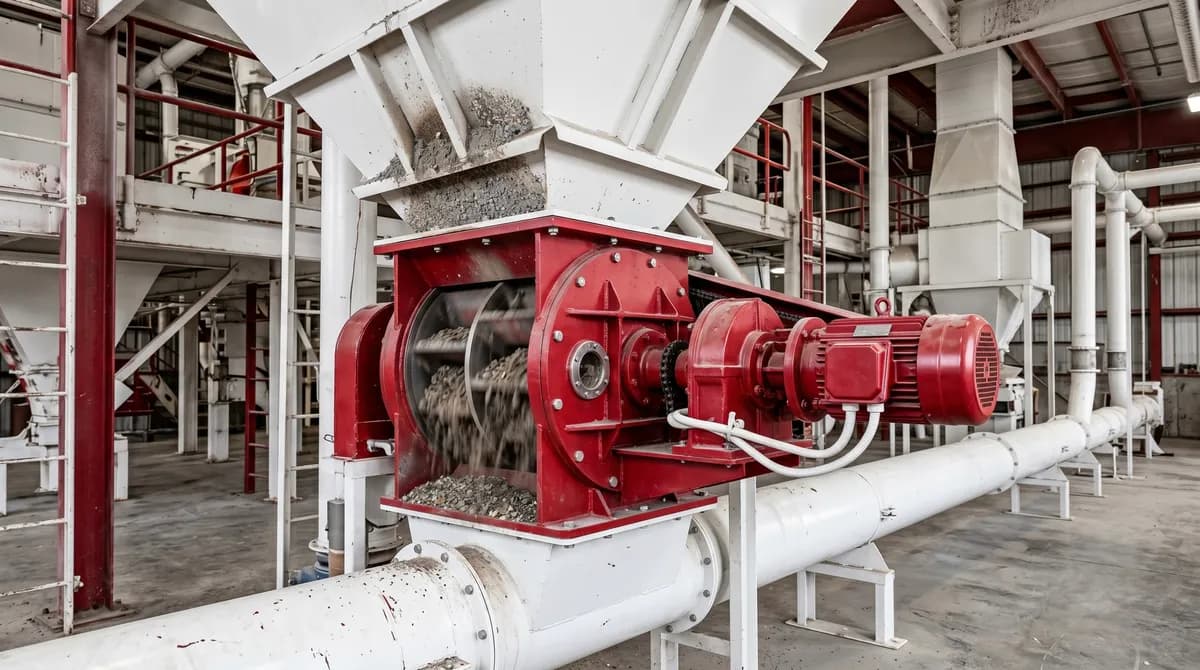
When factories move powders, pellets, grains, cement, fly ash, or other dry materials, one small problem can create a big mess. Material can spill, dust can spread, airflow can escape, and the whole process can slow down. That is why many plants use a Rotary Feeder for Bulk Material Handling. It helps move material in a smooth, controlled way from one place to another.
A Rotary Feeder for Bulk Material Handling is simple in idea but very useful in real work. It takes bulk material from a hopper, silo, cyclone, or bin and releases it at a steady rate. It also helps control air pressure in many systems. This makes it an important part of many industries like cement, food, chemicals, plastics, power plants, and more.
If you are a plant manager, engineer, factory owner, or buyer looking for better Bulk Material Handling Equipment, this guide will help you understand what a Rotary Feeder for Bulk Material Handling does, where it is used, and why it is so valuable.
What Is a Rotary Feeder for Bulk Material Handling?
A Rotary Feeder for Bulk Material Handling is a machine that helps move dry bulk material from one section of a system to another in a controlled flow. It has a rotating part with pockets or vanes. As it turns, it takes material in and drops it out little by little.
It is also often called a Rotary Airlock Valve, Airlock Rotary Feeder, or Industrial Rotary Feeder. In many plants, it does two jobs:
Feeds material at a steady rate
Prevents air from moving backward through the system
This is why it is also a key part of many Industrial Feeding System setups and Powder Handling System lines.
How Does a Rotary Feeder for Bulk Material Handling Work?
The working is easy to understand.
Simple working process:
Bulk material enters the top inlet.
The rotor pockets collect the material.
The rotor turns slowly.
Material is released from the bottom outlet.
Air movement is controlled at the same time.
This makes the Rotary Feeder for Bulk Material Handling useful in systems where flow must stay steady and dust must stay low.
Main Parts of a Rotary Feeder for Bulk Material Handling
Here are the basic parts:
Housing: The outer body that holds the material
Rotor: The rotating part with pockets
Shaft: Connects the rotor to the motor
End covers: Support the shaft
Drive system: Powers the rotation
Seals: Help reduce leakage
Each part must be made well for long life and smooth working, especially in a Heavy Duty Rotary Feeder.
Why Industries Use a Rotary Feeder for Bulk Material Handling
A Rotary Feeder for Bulk Material Handling is used because many dry materials do not flow evenly on their own. Some materials are sticky. Some are fine like powder. Some are heavy. Some create dust. A feeder helps solve these problems.
Common reasons include:
Better flow control
Less dust leakage
Lower air loss
Smooth material transfer
Better plant efficiency
Safer operation
In short, it keeps the system clean, controlled, and reliable.
Key Benefits of a Rotary Feeder for Bulk Material Handling
A good Rotary Feeder for Bulk Material Handling offers many practical benefits.
1. Steady Material Flow
It feeds material in a controlled way. This helps machines work better and reduces clogs.
2. Dust Control
Many powders create dust. A good Rotary Airlock Valve helps reduce dust escape and keeps the work area cleaner.
3. Air Locking
It stops air from moving backward in the system. This is very useful in pneumatic conveying lines.
4. Better Safety
Less dust and better control can lower fire, explosion, and slip risks.
5. Saves Time
A smooth feed means fewer stoppages and less manual work.
6. Works with Many Materials
It can handle powders, granules, pellets, flakes, and light aggregates.
7. Strong and Durable
A Heavy Duty Rotary Feeder can work in tough industrial conditions for a long time.
Common Uses of Rotary Feeder for Bulk Material Handling
A Rotary Feeder for Bulk Material Handling is used in many industries. It is one of the most useful types of Material Discharge Equipment.
Typical uses:
Feeding powder into pipelines
Releasing material from silos
Moving cement and fly ash
Handling plastic granules
Discharging grains and food powders
Controlling airflow in dust collection systems
Feeding boilers and burners
Industries That Use a Rotary Feeder for Bulk Material Handling
Industry | Common Material | Why It Uses a Rotary Feeder |
Cement | Cement, clinker dust, fly ash | Smooth feeding, dust control |
Food | Flour, sugar, spices, grains | Clean and controlled flow |
Chemicals | Powders, pellets | Safe discharge and air sealing |
Plastics | Granules, pellets | Steady feeding into machines |
Power Plants | Fly ash, lime | Reliable discharge |
Mining | Fine ores, minerals | Tough handling and steady flow |
Pharma | Fine powder | Clean, accurate feeding |
A Rotary Feeder for Bulk Material Handling is especially common in a Cement Plant Rotary Feeder setup because cement dust is fine, heavy, and hard to manage without proper feeding control.
Types of Rotary Feeder for Bulk Material Handling
Different plants need different feeder designs. Here is a simple comparison.
Type | Best For | Main Benefit |
Standard Rotary Feeder | General bulk material | Easy and reliable use |
Rotary Airlock Valve | Pneumatic conveying | Air sealing and flow control |
Heavy Duty Rotary Feeder | Tough materials | Strong build and long life |
Drop-Through Feeder | Gravity flow systems | Simple material discharge |
Blow-Through Feeder | Air conveying systems | Better air and material movement |
Cement Plant Rotary Feeder | Cement and fly ash | Handles dusty, abrasive material |
Choosing the right type depends on the material, temperature, pressure, and plant need.
Where Rotary Feeder for Bulk Material Handling Gives the Best Results
A Rotary Feeder for Bulk Material Handling works best when:
Material must flow at a fixed rate
Dust must be controlled
Air pressure must be sealed
The material is dry and free-flowing
Feeding must be continuous
It is commonly used below:
Silos
Hoppers
Cyclones
Dust collectors
Storage bins
Pneumatic lines
What to Check Before Buying One
If you are buying from a Rotary Valve Manufacturer, check these points first.
Important buying factors:
Material type
Particle size
Bulk density
Temperature
Capacity needed
Pressure difference
Rotor clearance
Wear resistance
Maintenance ease
A good Industrial Rotary Feeder should match your process, not just your budget.
Rotary Feeder for Bulk Material Handling vs Other Feeding Options
Feature | Rotary Feeder | Screw Feeder | Vibratory Feeder |
Flow control | Very good | Good | Fair |
Air sealing | Excellent | Limited | Poor |
Dust control | Good | Good | Fair |
Material types | Wide range | Best for some powders | Light materials |
Maintenance | Moderate | Moderate | Low to moderate |
Best use | Airlock and discharge | Metered feeding | Gentle movement |
This table shows why a Rotary Feeder for Bulk Material Handling is often the better choice for airlock and discharge jobs.
Why a Heavy Duty Rotary Feeder Matters
Some industries use hard, hot, or abrasive material. In those cases, a normal feeder may wear out too fast. A Heavy Duty Rotary Feeder Valve is built with stronger materials and better clearances to last longer.
It is useful when:
Material is abrasive
Operation runs 24/7
Temperatures are high
Downtime is costly
Maintenance access is limited
This is one reason plant buyers prefer a trusted Rotary Valve Manufacturer with real industry experience.
Role in a Powder Handling System
A Rotary Feeder for Bulk Material Handling is often a core part of a Powder Handling System. Fine powders can bridge, clump, or create dust clouds. The feeder helps by:
Keeping the feed steady
Reducing backflow
Improving process accuracy
Helping downstream machines run smoothly
For plants handling flour, cement, chemicals, or pigments, the feeder is not just a machine. It is a control point in the whole system.
How It Supports Better Plant Performance
Using a Rotary Feeder for Bulk Material Handling can improve the full production line.
Plant benefits include:
Less material waste
Lower cleanup time
Fewer breakdowns
Better product consistency
Easier automation
Better worker safety
When a feeder works well, the whole line becomes more stable.
What Makes a Good Industrial Feeding System
A strong Industrial Feeding System should do more than just move material. It should:
Match the flow rate
Handle the material type
Stay sealed under pressure
Resist wear
Be easy to inspect and maintain
That is why the feeder is often one of the most important parts of the system.
Maintenance Tips for Long Life
To keep a Rotary Feeder for Bulk Material Handling working well:
Check rotor clearance often
Watch for wear on vanes and housing
Lubricate bearings properly
Keep foreign objects out
Clean sticky material build-up
Inspect seals and end plates
Follow the maker’s service plan
Good care saves money and lowers downtime.
Quick Comparison: Why Buyers Prefer Rotary Feeders
Buyer Need | How the Feeder Helps |
Better control | Steady discharge |
Less dust | Cleaner operation |
Air sealing | Works as a rotary airlock |
Tough use | Handles industrial loads |
Simple operation | Easy to run in plants |
Flexible use | Fits many materials |
This is why the Rotary Feeder for Bulk Material Handling remains a trusted choice across many industries.
How to Choose the Right Supplier
When choosing a Rotary Valve Manufacturer, look for:
Custom design support
Material knowledge
Strong build quality
Good after-sales help
Proven use in your industry
A reliable supplier will help you choose the right Industrial Rotary Feeder for your process, not just sell a standard unit.
The Smart Choice for Cleaner, Steadier Bulk Flow
A Rotary Feeder for Bulk Material Handling is more than a simple machine. It is a smart solution for safe, steady, and clean movement of dry bulk material. Whether you need a Rotary Airlock Valve for a conveying line, a Heavy Duty Rotary Feeder for rough industrial use, or a Cement Plant Rotary Feeder for dusty material, the right feeder can improve the full system.
For businesses that want trusted performance and practical support, Oswar Rotocorp is a name worth knowing. If you are planning a new setup or upgrading an old one, contact us to explore the right Rotary Feeder for Bulk Material Handling for your plant.
FAQs
1. What is a Rotary Feeder for Bulk Material Handling used for?
It is used to move dry bulk material in a controlled way and often helps seal air in conveying systems.
2. Is a Rotary Airlock Valve the same as a rotary feeder?
They are very similar. A Rotary Airlock Valve is often used when air sealing is also needed.
3. Which industries use an Industrial Rotary Feeder?
Cement, food, chemicals, plastics, power, mining, and pharma industries use it often.
4. Why is a Heavy Duty Rotary Feeder needed?
It is needed for abrasive, hot, or heavy-duty work where normal feeders may wear too fast.
5. How does a Rotary Feeder for Bulk Material Handling help in a Powder Handling System?
It keeps powder flow steady, reduces dust, and helps the system run smoothly.
6. What is the main benefit of a Cement Plant Rotary Feeder?
It handles dusty cement materials with good flow control and less leakage.
7. How do I choose the right Rotary Valve Manufacturer?
Look for experience, custom options, strong quality, and after-sales support.
8. Can Rotary Feeder for Bulk Material Handling be used for pellets and granules?
Yes, it works well with pellets, granules, powders, and many dry materials.
9. Why do buyers prefer Oswar Rotocorp for rotary feeders?
Many buyers look for Oswar Rotocorp because they want practical design, industrial use support, and reliable bulk handling solutions.
10. How often should a Rotary Feeder for Bulk Material Handling be maintained?
It depends on use, but regular checking of wear parts, seals, and rotor clearance is important.
