

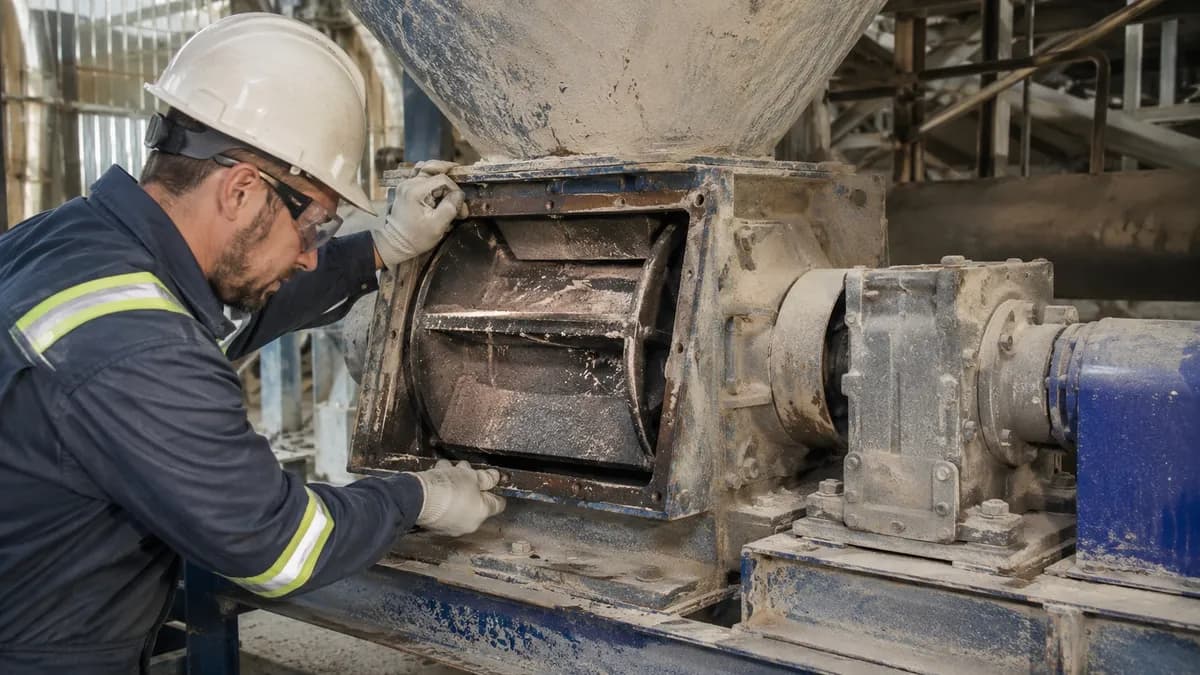
Your rotary airlock maintenance program can make or break your production line. These critical components in bulk material handling equipment work tirelessly to feed materials while maintaining air pressure differences. When they fail, your entire system stops.
Think about it. A poorly maintained rotary airlock leads to air leaks, material flow problems, and unexpected breakdowns. This means lost production time, wasted materials, and frustrated workers. On the flip side, proper rotary airlock valve maintenance keeps your equipment running smoothly for years.
Regular maintenance does more than prevent breakdowns. It improves rotary valve efficiency, reduces energy costs, and ensures product quality. In food processing plants, a well-maintained airlock prevents contamination. In pneumatic conveying systems, it maintains proper pressure for optimal material flow.
This guide gives you practical steps to maintain your rotary airlocks effectively. You'll learn inspection techniques, troubleshooting methods, and preventive strategies that work in real industrial settings.
Understanding Rotary Airlock Components and Their Maintenance Needs
Before diving into maintenance procedures, let's understand what makes up an industrial airlock valve:
Key Components That Need Regular Attention
- Rotor vanes: The rotating blades that move material
- Housing: The outer casing that contains the rotor
- End plates: Seal the sides of the housing
- Bearings: Support the rotor shaft
- Seals: Prevent air and material leakage
- Drive components: Motor, chain, or belt systems
Each component faces different wear patterns. Rotor vanes experience abrasion from materials. Bearings suffer from heat and contamination. Seals degrade from pressure and chemical exposure.
Daily and Weekly Rotary Valve Maintenance Checklist
Small daily checks prevent big problems. Here's your essential rotary valve maintenance checklist for frequent inspections:
Daily Checks (5-10 minutes)
- Listen for unusual noises during operation
- Check for visible material leaks around seals
- Monitor motor temperature with your hand
- Verify smooth rotation without jerking
- Look for dust accumulation on external parts
Weekly Inspections (15-20 minutes)
- Measure motor amperage draw
- Check chain or belt tension
- Inspect seal areas for wear marks
- Test emergency stop functions
- Clean external surfaces and vents
Comprehensive Maintenance Schedule Table
Frequency | Task | Time Required | Tools Needed |
Daily | Visual inspection, noise check | 5-10 min | None |
Weekly | Clean exterior, check drive system | 15-20 min | Basic hand tools |
Monthly | Lubricate bearings, check clearances | 30-45 min | Grease gun, feeler gauges |
Quarterly | Deep inspection, replace worn seals | 2-3 hours | Full toolkit |
Annually | Complete overhaul, replace wear parts | 4-8 hours | Specialized tools |
Identifying Early Warning Signs of Rotary Valve Wear and Tear
Catching problems early saves money and prevents downtime. Watch for these warning signs during your airlock valve inspection:
Visual Indicators
- Rotor wear patterns: Uneven surfaces or grooves on vanes
- Housing damage: Scratches or gouges on internal walls
- Seal deterioration: Cracks, hardening, or material buildup
- Bearing issues: Rust, pitting, or excessive play
Performance Indicators
- Increased power consumption (10-15% above normal)
- Reduced material flow rate
- Air leakage causing pressure drops
- Temperature rise in bearings or motor
- Vibration increase during operation
How to Measure Rotor Clearances
Proper clearances ensure efficient operation. Here's how to check:
- Lock out the equipment and remove the end plate
- Insert feeler gauges between rotor tips and housing
- Record measurements at multiple points
- Compare with manufacturer specifications
- Plan replacement if clearances exceed limits
Common Rotary Airlock Problems and Solutions
This airlock valve troubleshooting table helps you diagnose and fix issues quickly:
Problem | Possible Causes | Solutions |
Material leakage | Worn rotor tips, damaged seals | Replace seals, adjust clearances |
Air blowing through | Excessive clearances, bent rotor | Machine rotor, replace if needed |
Motor overheating | Overloading, bearing failure | Check material feed rate, replace bearings |
Unusual noises | Foreign objects, worn bearings | Inspect and clean, lubricate bearings |
Reduced flow rate | Rotor buildup, worn vanes | Clean thoroughly, resurface vanes |
Shaft seal leaks | Worn packing, misalignment | Replace packing, check alignment |
Vibration | Imbalanced rotor, loose mounting | Balance rotor, tighten bolts |
Preventive Maintenance for Rotary Valves: Strategies That Work
Smart preventive maintenance for rotary valves reduces emergency repairs by 70% or more. Here's how to build an effective program:
1. Establish Baseline Performance
- Record normal operating parameters
- Document power consumption
- Note typical temperatures
- Track material flow rates
2. Create Maintenance Documentation
- Keep detailed service records
- Photo document wear patterns
- Track parts replacement history
- Note any modifications made
3. Stock Critical Rotary Airlock Replacement Parts
Essential spare parts inventory:
- Rotor shaft seals
- Bearing sets
- Drive chains or belts
- Gaskets and O-rings
- Emergency repair kits
4. Train Your Team
- Proper inspection techniques
- Safe lockout procedures
- Troubleshooting methods
- When to call specialists
Safety Precautions During Maintenance
Working on rotary feeder maintenance requires strict safety measures:
Before Starting Any Work:
- Lock out and tag out all power sources
- Verify zero energy with testing equipment
- Wait for complete stop before opening
- Check internal pressure is released
- Wear appropriate PPE including safety glasses
During Maintenance:
- Use proper lifting techniques for heavy parts
- Support components before removing fasteners
- Keep work area clean and organized
- Have emergency contact numbers ready
- Never bypass safety devices
Best Practices for Extending Equipment Life
These proven industrial maintenance practices can double your equipment lifespan:
1. Match Equipment to Application
- Don't oversize or undersize your airlock
- Consider material characteristics
- Account for temperature conditions
- Plan for future capacity needs
2. Control Operating Environment
- Maintain proper ventilation
- Control moisture levels
- Prevent material contamination
- Monitor ambient temperatures
3. Regular Cleaning Protocols
- Remove material buildup weekly
- Clean air vents monthly
- Flush bearing housings quarterly
- Deep clean during annual shutdowns
4. Proper Lubrication Practices
- Use recommended lubricant types
- Follow manufacturer schedules
- Don't over-lubricate bearings
- Keep grease fittings clean
Common Maintenance Mistakes to Avoid
Even experienced teams make these errors. Learn from others' mistakes.
Mistake #1: Ignoring Small Leaks
Small air leaks grow quickly. A pinhole leak today becomes a major pressure loss next month.
Mistake #2: Over-tightening Packing
Excessive packing pressure causes premature shaft wear and increases power consumption.
Mistake #3: Using Wrong Replacement Parts
Generic parts may fit but won't perform properly. Always verify specifications.
Mistake #4: Skipping Documentation
Poor records make troubleshooting impossible. Document everything.
Integration with Dust Collection Systems
Your rotary airlock plays a crucial role in dust collection systems. Proper maintenance ensures:
- Consistent negative pressure
- Efficient dust removal
- Reduced emissions
- Compliance with regulations
Regular inspection prevents dust bypass, which can damage downstream equipment and create health hazards.
Frequently Asked Questions
Q1: How often should I inspect my rotary airlock?
Daily visual checks take 5 minutes. Perform detailed monthly inspections and complete quarterly maintenance based on operating conditions.
Q2: What's the typical lifespan of a rotary valve?
With proper maintenance, industrial rotary valves last 10-15 years. Heavy-duty applications may need rebuilding every 5-7 years.
Q3: How do I know when to replace the rotor instead of repairing it?
Replace when clearances exceed twice the original specification or when repair costs exceed 50% of replacement cost.
Q4: What causes premature bearing failure in rotary airlocks?
Common causes include contamination, over-lubrication, misalignment, and excessive temperature. Regular maintenance prevents most failures.
Q5: Can I perform rotary valve maintenance while the system is running?
Never attempt maintenance on operating equipment. Always follow lockout/tagout procedures for safety.
Q6: How do I prevent material buildup inside the valve?
Regular cleaning, proper clearances, and selecting the right valve design for your material prevent most buildup issues.
Q7: What's the best way to check for air leakage?
Use ultrasonic leak detectors or apply soapy water to suspect areas while the system is pressurized.
Q8: Should I rebuild or replace my old rotary airlock?
Rebuild if the housing is undamaged and parts are available. Replace if technology improvements offer significant efficiency gains.
Q9: How do I reduce maintenance costs without compromising reliability?
Invest in quality equipment, train operators properly, maintain spare parts inventory, and follow preventive maintenance schedules.
Q10: What documentation should I keep for rotary valve maintenance?
Maintain inspection logs, repair records, parts replacement history, performance data, and any modification documentation.
Your Partner in Reliable Rotary Valve Performance
Quality equipment paired with proper maintenance creates unbeatable reliability. That's why leading industries trust Oswar Rotocorp for their rotary airlock and valve needs. With decades of manufacturing expertise, Oswar Rotocorp understands that superior design makes maintenance easier and extends equipment life.
When you invest in well-engineered rotary valves, you're not just buying equipment – you're investing in productivity, efficiency, and peace of mind. Combined with the maintenance practices outlined in this guide, quality equipment delivers years of dependable service.
Ready to upgrade your rotary airlock systems or need expert guidance on maintenance solutions? Contact us today to discuss how the right equipment and maintenance strategy can transform your operations.
