

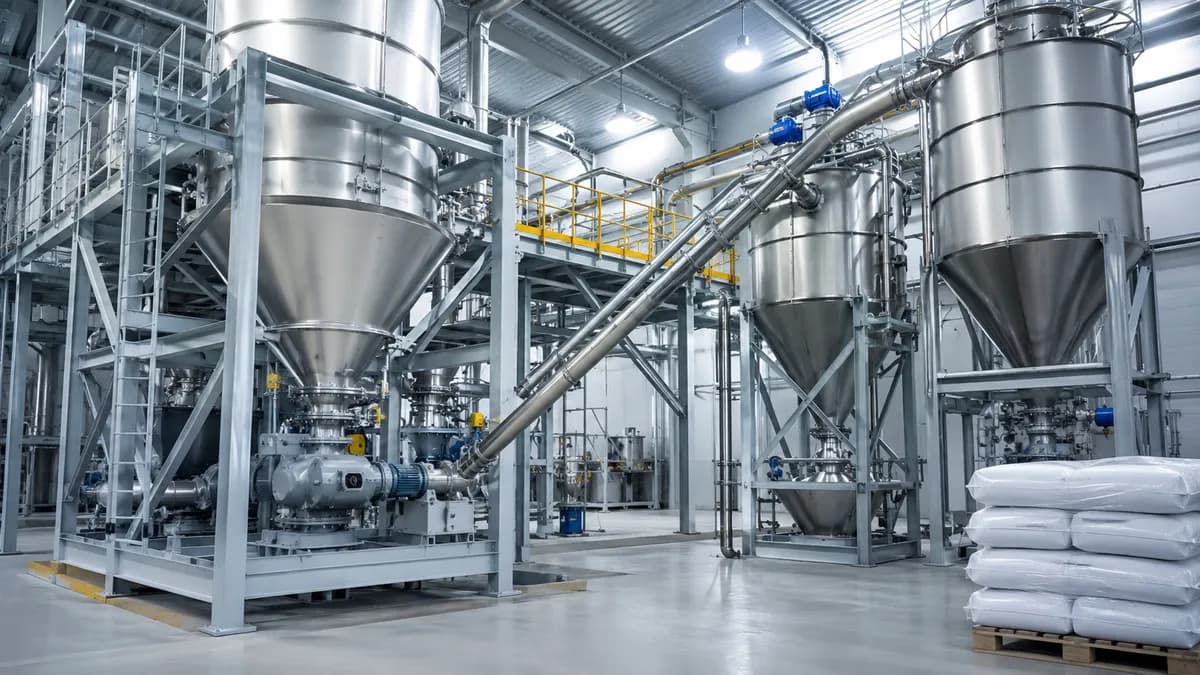
If you work with powders in your factory or plant, you know how tricky they can be. One wrong move, and you've got powder everywhere clogging machines, creating dust clouds, or worse, causing safety hazards. That's where powder handling systems come to the rescue. These smart solutions help companies move, store, mix, and process powders safely and efficiently.
Think about it from the flour in your bread to the chemicals in your paint, powders are everywhere in manufacturing. Yet many businesses still struggle with outdated methods that waste product, slow down production, and put workers at risk. Without proper powder handling equipment, companies face countless headaches: product contamination, inconsistent mixing, equipment breakdowns, and hefty cleanup costs.
The good news? Modern industrial powder handling solutions can transform these challenges into smooth operations. Whether you're dealing with fine pharmaceutical powders, sticky food ingredients, or abrasive chemicals, the right system makes all the difference. Today's technology helps you move powders faster, reduce waste, protect workers, and boost your bottom line. Let's dive deep into everything you need to know about choosing and using these game-changing systems.
What Are Powder Handling Systems?
Powder handling systems are specialized setups designed to move, store, process, and package powdered materials in industrial settings. Think of them as the backbone of any operation dealing with bulk powders; they ensure your materials flow smoothly from point A to point B without creating a mess or safety hazard.
These systems combine various pieces of powder handling equipment to create a complete solution. They handle everything from receiving raw powder materials to delivering the finished product. The beauty lies in their versatility: they work with fine powders like flour, coarse materials like salt, and everything in between.
Key Components of Powder Processing Equipment
Every powder processing equipment setup includes several essential parts working together:
Hoppers and Silos: Store bulk powders safely
Feeders: Control the flow rate of powders
Conveyors: Move materials through the system
Mixers and Blenders: Combine different powders uniformly
Screening Equipment: Remove lumps and foreign materials
Dust Collection Systems: Keep the air clean and safe
Control Systems: Monitor and manage the entire operation
How Do Powder Handling Systems Work?
Understanding how bulk powder handling systems operate helps you make better decisions for your facility. Here's the typical process:
Receiving: Powder arrives in bags, boxes, or bulk containers
Storage: Materials move to silos or hoppers for temporary holding
Conveying: Powder conveying systems transport materials through pipes or conveyors
Processing: Powders get mixed, screened, or treated as needed
Packaging: Final products move to filling and sealing stations
The magic happens through careful engineering. Pneumatic conveying systems use air pressure to push powders through pipes, while mechanical systems use screws, belts, or chains. Each method suits different powder types and distances.
Types of Powder Handling Systems
Different industries need different solutions. Here are the main types of material handling systems for powders:
1. Pneumatic Conveying Systems
These systems use air to move powders through pipes. They're perfect for:
Long-distance transport
Multiple delivery points
Minimal product contamination
2. Mechanical Conveying Systems
Using physical components like screws or belts, these systems work well for:
Heavy or abrasive powders
Short distances
High-volume operations
3. Vacuum Transfer Systems
Powder transfer equipment using vacuum technology excels at:
Dust-free operation
Gentle handling of fragile powders
Easy cleaning and maintenance
4. Gravity-Fed Systems
Simple but effective, these systems use gravity for:
Vertical powder flow
Cost-effective solutions
Minimal moving parts
Comparison of Powder Handling Technologies
Technology Type | Best For | Speed | Cost | Maintenance | Dust Control |
Pneumatic | Fine powders, long distances | High | High | Medium | Excellent |
Mechanical | Heavy materials, short runs | Medium | Medium | High | Good |
Vacuum | Fragile powders, clean rooms | Medium | High | Low | Excellent |
Gravity-Fed | Simple operations | Low | Low | Very Low | Fair |
Benefits of Modern Powder Handling Solutions
Investing in proper powder storage systems and handling equipment pays off quickly:
1. Increased Productivity
Faster material transfer
Reduced downtime
Automated operations
2. Better Product Quality
Consistent mixing results
Less contamination
Accurate dosing
3. Enhanced Safety
Reduced dust exposure
Fewer manual handling injuries
Fire and explosion prevention
4. Cost Savings
Less product waste
Lower labor costs
Reduced cleaning time
5. Regulatory Compliance
Meet health and safety standards
Maintain proper documentation
Ensure product traceability
Industry Applications of Powder Handling Systems
Different industries rely on powder mixing equipment and handling systems for unique needs:
Industry | Common Powders | Key Requirements | Typical Systems |
Pharmaceutical | APIs, excipients | High purity, containment | Vacuum, isolators |
Food & Beverage | Flour, spices, additives | Sanitary design, allergen control | Pneumatic, mechanical |
Chemical | Pigments, catalysts | Corrosion resistance, safety | Dense phase, vacuum |
Plastics | Resins, colorants | Consistent feeding, mixing | Pneumatic, gravimetric |
Cosmetics | Talc, minerals | Gentle handling, batch tracking | Vacuum, ribbon mixers |
Factors to Consider When Choosing Powder Handling Equipment
Material Properties
Particle size and shape
Flowability characteristics
Moisture sensitivity
Abrasiveness
Process Requirements
Transfer distance
Production volume
Accuracy needs
Batch vs. continuous operation
Facility Constraints
Available space
Power supply
Environmental conditions
Existing equipment
Budget Considerations
Initial investment
Operating costs
Maintenance expenses
ROI timeline
Automation Trends in Powder Handling
The industry is rapidly embracing smart technology:
IoT Integration: Sensors monitor system performance in real-time
AI-Powered Controls: Predictive maintenance prevents breakdowns
Remote Monitoring: Manage operations from anywhere
Data Analytics: Optimize processes based on historical data
Robotic Integration: Automated bag handling and palletizing
Common Challenges in Powder Handling
Even the best systems face obstacles:
Powder Bridging: Materials form arches in hoppers
Segregation: Different particles separate during handling
Static Buildup: Creates safety hazards and flow problems
Moisture Absorption: Changes powder properties
Equipment Wear: Abrasive materials damage components
Expert Tips for Optimal Performance
Know Your Powder: Test material properties before system design
Size It Right: Oversized systems waste energy; undersized ones bottleneck
Plan for Growth: Choose expandable systems for future needs
Train Your Team: Proper operation prevents most problems
Document Everything: Keep detailed maintenance and operation logs
Common Mistakes to Avoid
Ignoring Dust Control: Always include proper collection systems
Skipping Material Tests: Never assume all powders behave the same
Choosing Price Over Quality: Cheap equipment costs more long-term
Neglecting Maintenance: Regular care prevents major breakdowns
Forgetting About Cleaning: Design for easy access and sanitation
Maintenance Best Practices
Daily Tasks
Visual inspections
Check for unusual noises
Monitor dust collectors
Verify control readings
Weekly Maintenance
Clean filters
Lubricate moving parts
Test safety systems
Check seal integrity
Monthly Procedures
Calibrate feeders
Inspect wear parts
Review system performance
Update maintenance logs
Future Developments in Powder Handling Technology
The industry continues evolving with exciting innovations:
Sustainable Solutions: Energy-efficient designs and recyclable components
Advanced Materials: Wear-resistant coatings extend equipment life
Smart Sensors: Real-time quality monitoring during processing
Modular Designs: Flexible systems adapt to changing needs
Virtual Reality Training: Safer, more effective operator education
Frequently Asked Questions
Q1: What's the difference between dilute and dense phase pneumatic conveying?
Dilute phase uses high velocity and low pressure, moving powders in suspension. Dense phase uses low velocity and high pressure, moving powders in plugs. Dense phase is gentler on materials and creates less dust but costs more initially.
Q2: How often should powder handling equipment be cleaned?
Cleaning frequency depends on your material and regulations. Food and pharmaceutical applications often require daily cleaning, while chemical plants might clean weekly or during product changeovers. Always follow industry guidelines and manufacturer recommendations.
Q3: Can one system handle multiple powder types?
Yes, many systems handle various powders with proper cleaning between products. However, dedicated systems work better for incompatible materials (like allergens in food processing) or when frequent changeovers slow production.
Q4: What causes powder flow problems in hoppers?
Common causes include moisture absorption, particle shape, static electricity, and improper hopper design. Solutions include flow aids like vibrators, air injection systems, or special coatings.
Q5: How do I calculate the right system capacity?
Consider your peak production needs, material bulk density, required transfer rate, and future growth plans. Most suppliers offer sizing calculators or engineering support to ensure proper capacity.
Q6: What safety features are essential for powder handling systems?
Key safety features include explosion-proof designs, grounding for static control, dust collection systems, emergency stops, and proper ventilation. Requirements vary by material hazard level.
Q7: How much does a powder handling system cost?
Costs range from ₹43 lakh for simple systems to over ₹8.5 crore for complex installations. Factors include system type, capacity, automation level, customization requirements, material characteristics, installation complexity, and special features such as sanitary or explosion-proof designs.
Q8: Can powder handling systems reduce product waste?
Absolutely! Modern systems minimize spillage, ensure accurate dosing, prevent contamination, and enable material recovery from dust collectors. Many users see waste reduction of 50% or more.
Q9: What's the typical ROI for powder handling equipment?
Most facilities see payback within 12–24 months through labor savings, reduced waste, and increased production. Energy-efficient systems and those replacing manual handling often pay back even faster.
Q10: How do I choose between pneumatic and mechanical conveying?
Consider your powder characteristics, distance, layout, and budget. Pneumatic suits long distances and multiple destinations; mechanical works for short runs and abrasive materials. Many facilities use both types.
Your Path to Powder Handling Excellence
Making the right choice in powder handling systems transforms your operation from chaotic to controlled, wasteful to efficient. Quality equipment doesn't just move powder it protects your workers, preserves product quality, and powers your profitability.
At Oswar Rotocorp, we understand that every powder presents unique challenges. Our engineering team combines decades of experience with cutting-edge technology to deliver custom solutions that work. From initial consultation through installation and beyond, we partner with you to ensure your powder handling system exceeds expectations.
Ready to revolutionize your powder handling operations? Contact us today for expert guidance and customized solutions that match your specific needs. Let's work together to design a system that boosts your productivity, ensures safety, and delivers the ROI you deserve.
