
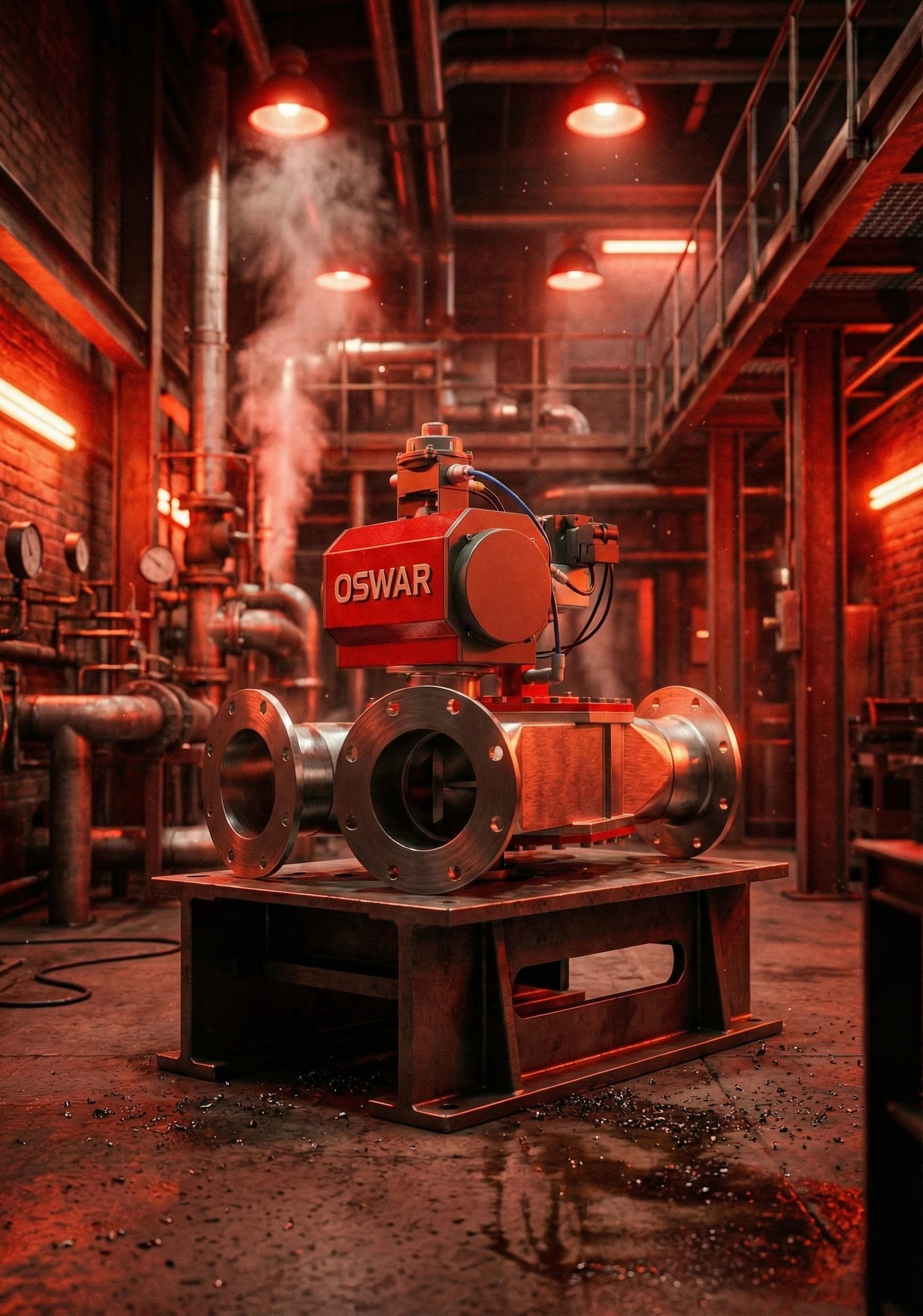
If you are working with pneumatic conveying systems, you already know that moving material is only one part of the process. The real challenge is controlling where that material goes without stopping the system or causing losses.
This is exactly where a diverter valve becomes important.
Instead of manually switching pipelines or interrupting production, a properly selected valve allows you to redirect material smoothly and efficiently. Whether you are handling cement, powders, or bulk solids, the right setup can save both time and operational cost.
In this guide, you will understand how these valves work, which types are used in real industries, and what actually affects the diverter valve price in India.
What is a Diverter Valve
A diverter valve is a mechanical device used in pneumatic conveying systems to direct the flow of bulk materials from one source to multiple destinations or vice versa.
It is commonly installed in pipelines where:
•Material needs to be routed to different storage units
•Multiple processing lines are connected
•Controlled distribution is required
Instead of stopping the system and manually redirecting flow, a diverter valve allows smooth switching without interrupting operations.
How a Diverter Valve Works in Real Systems
Let’s keep this simple and practical.
Material enters the pipeline and reaches the valve. Inside, there is a mechanism such as a flap, plug, or rotating section that directs the flow toward a selected outlet.
Once the direction is set:
•Material continues flowing in that path
•Switching can be done without stopping the system
•Leakage is minimized if sealing is proper
Depending on your setup, switching can be:
•Manual for basic systems
•Pneumatic for faster operation
•Motorized for automated plants
In real industrial use, smooth switching is what separates an average system from an efficient one.
Types of Diverter Valve Used in Pneumatic Conveying
Different industries use different designs based on material type and system pressure. Let’s go through the most practical ones.
Two Way Diverter Valve for Simple Routing
This is the most commonly used configuration.
You have:
•One inlet
•Two outlet paths
It is used when you need to switch between two destinations, like filling two silos alternately.
Three Way Diverter Valve for Flexible Distribution
When your system is slightly more complex, a three way design gives better control.
It allows:
Multiple routing options
Better flexibility in plant operations
Gravity Diverter Valve in Bulk Systems
A gravity diverter is used when material flow depends on gravity instead of air pressure.
You will typically see this in:
•Vertical pipelines
•Storage discharge systems
It works well for bulk solids where controlled direction is needed without pressurized conveying.
Plug Type Diverter Valve for Better Sealing
If your system handles fine powders, sealing becomes critical.
Plug type valves:
•Offer tighter sealing
•Reduce leakage
•Perform better in pneumatic systems
Flap Type Diverter Valve for Cost Efficient Systems
This is a simpler design.
It is suitable for:
•Low pressure systems
•Less critical applications
If budget is a concern and material is not highly sensitive, this type works well.
Diverter Valve Price in India: What You Should Expect
Now let’s talk about what most buyers actually search for the diverter valve price.
Instead of a fixed number, think of pricing as a range based on your requirement.
For example, a standard industrial valve around 500mm size may cost close to ₹2,86,000 to ₹3,45,000 depending on material and actuation type.
So when someone asks for diverter valve price, the correct answer always depends on application, not just size.
What Actually Affects Diverter Valve Price
Before you compare quotes, it is important to understand what you are paying for.
Size and Flow Capacity
Larger valves handle more material and require stronger construction.
Material Used
•Mild steel is economical
•Stainless steel increases durability and cost
Pressure Conditions
Higher pressure systems demand precision engineering.
Sealing Requirement
Better sealing means less leakage and better efficiency.
Automation Level
Manual valves cost less
Automated valves increase investment but improve control
In many cases, buyers try to save cost initially but end up spending more on maintenance later.
Common Problems You Can Avoid with the Right Valve
Let’s talk about real issues seen in industries.
Problems
•Material leakage
•Blockage in pipelines
•Uneven distribution
•Frequent downtime
Why They Happen
Most of the time, the problem is not the system. It is incorrect valve selection.
What You Should Do Instead
•Match valve type with material
•Do not ignore sealing quality
•Choose correct size
•Avoid cheapest option without checking performance
In practical industry experience, correct selection always saves more money than choosing a lower diverter valve price.
Diverter Valve vs Other Equipment
You might be comparing different options while designing your system.
Here is a quick clarity.
Diverter Valve vs Slide Gate Valve
A diverter valve redirects flow
A slide gate valve stops or controls it
Diverter Valve vs Rotary Airlock Valve
Diverter valve handles direction
Airlock valve handles sealing and discharge
Diverter Valve vs Double Flap Valve
Diverter valve is for routing
Double flap valve is for pressure isolation
Knowing this difference helps avoid wrong equipment decisions.
How to Choose the Right Diverter Valve
If you are selecting a valve, don’t rush this step.
Ask yourself:
•What material am I handling
•What is the flow rate
•Is the system high pressure or gravity based
•How many outlets do I need
•Do I need automation
Once you answer these, selection becomes much easier and more accurate.
Choosing the Right Supplier Makes a Big Difference
Not all valves perform the same, even if they look similar.
A reliable manufacturer will:
•Understand your application
•Suggest correct configuration
•Provide better sealing design
•Reduce long term maintenance issues
This is where experience matters more than just product availability.
Upgrade Your System with the Right Diverter Valve
A high performing diverter valve can make a clear difference in how efficiently your pneumatic conveying system runs, from smooth material routing to reduced losses and downtime. Instead of choosing based only on diverter valve price, it’s important to invest in a solution that truly fits your application and delivers long term reliability. Oswar Rotocorp provides engineered solutions designed for real industrial conditions, helping you achieve consistent performance without compromise. If you’re planning to improve your system or need expert guidance, contact us today and get the right solution tailored to your exact requirements.
Frequently Asked Questions
1. What is a diverter valve and why is it important
A diverter valve is used to redirect the flow of material in a conveying system without stopping the process. It becomes important in industries where material needs to be distributed across multiple destinations efficiently. Without it, operations would require frequent manual intervention, which increases downtime and reduces productivity.
2. What is the average diverter valve price in India
The diverter valve price in India usually starts from around ₹25,000 for smaller or basic valves and can go beyond ₹5,00,000 for heavy duty industrial applications. The final cost depends on size, material, pressure rating, and whether the valve is manual or automated.
3. How do I choose the right diverter valve for my system
Start by understanding your material type, flow rate, and system pressure. Then decide how many outlet paths you need. If your system handles fine powders, focus on sealing quality. If it is a large industrial setup, automation may also be required.
4. What is the difference between gravity diverter and pneumatic diverter
A gravity diverter works in systems where material flows due to gravity, usually in vertical pipelines. Pneumatic diverters are used in pressurized systems where air moves the material through pipelines.
5. Can diverter valves handle powder materials efficiently
Yes, but only if the correct type is selected. Plug type valves are usually better for powders because they offer tighter sealing and reduce leakage compared to simpler designs.
6. Why does diverter valve leakage happen
Leakage usually happens due to poor sealing, incorrect installation, or wear and tear over time. Choosing a high quality valve and maintaining proper clearance helps avoid this issue.
7. Is automation necessary in diverter valves
Not always. For small systems, manual valves work fine. But in large plants where frequent switching is required, automated valves improve efficiency and reduce manual effort.
8. How often should a diverter valve be maintained
Regular inspection is recommended based on usage. In most industrial systems, periodic checks for wear, alignment, and sealing performance help avoid unexpected failures.
9. Which industries commonly use diverter valves
Diverter valves are widely used in industries such as cement, food processing, pharmaceuticals, chemicals, power plants, and bulk material handling. Manufacturers like Oswar Rotocorp design these valves to ensure efficient material flow and reliable performance across different industrial applications.
10. What factors affect the cost of a diverter valve
The cost of a diverter valve depends on several factors including valve size, construction material, pressure rating, number of outlets, type of actuation (manual or pneumatic), and sealing requirements. Oswar Rotocorp offers application specific designs that help industries choose the right valve based on performance needs and long term efficiency.