

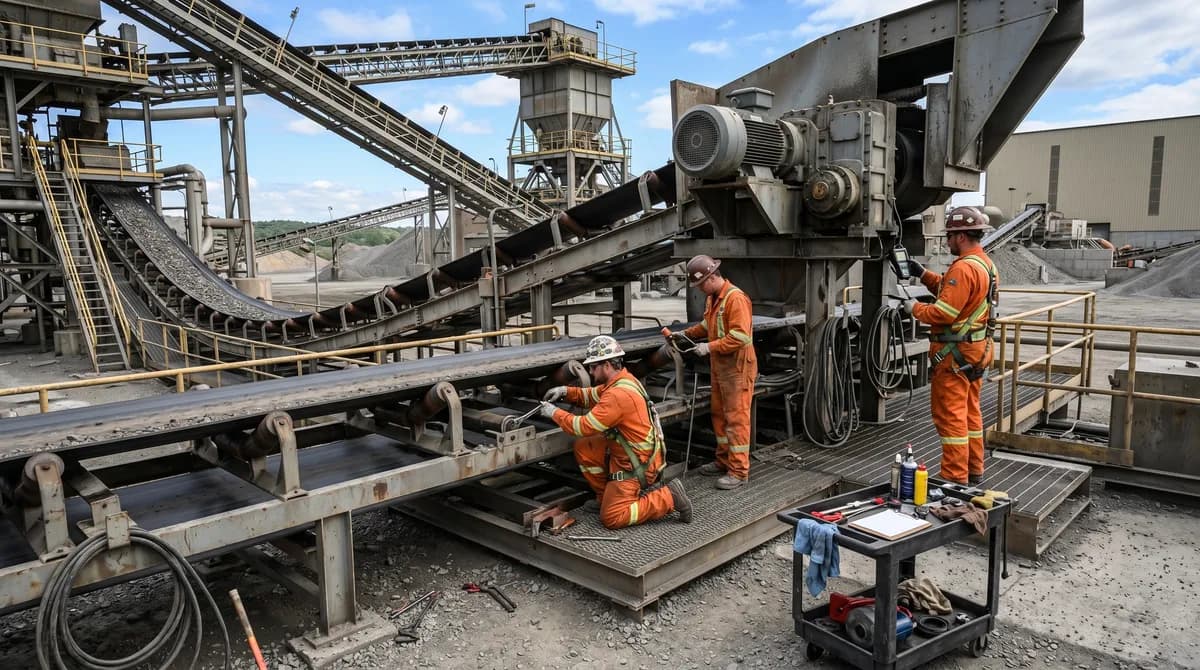
Running a plant without proper maintenance is like driving a car without ever changing the oil – sooner or later, something will break down. For industries handling tons of raw materials daily, equipment failure isn't just inconvenient; it's costly and dangerous.
Every minute your bulk material handling equipment sits idle costs money. Studies show that unplanned downtime can cost manufacturers anywhere from 50,000 to 5 million per hour, depending on the industry. Whether you're running a cement plant, food processing facility, or chemical manufacturing unit, your material handling systems are the backbone of your operations.
But here's the good news: most equipment failures are preventable. A solid Bulk Material Handling Equipment Maintenance Checklist can reduce breakdowns by up to 75% and extend equipment life by 20-40%. This means fewer emergency repairs, safer working conditions, and more predictable production schedules.
Think of maintenance as an investment, not an expense. When you keep your conveyors, rotary valves, and other handling equipment in peak condition, you're protecting your bottom line. This guide will show you exactly how to create and implement a preventive maintenance checklist that keeps your plant running smoothly, safely, and profitably.
Why Your Plant Needs a Comprehensive Maintenance Strategy
The Hidden Costs of Poor Maintenance
When equipment breaks down unexpectedly, the repair bill is just the beginning. You're also paying for:
- Lost production time
- Rushed shipping costs for replacement parts
- Overtime labor for emergency repairs
- Potential safety incidents and their consequences
- Damaged product or raw materials
- Customer dissatisfaction from delayed orders
A proper industrial equipment maintenance program prevents these cascading costs by catching problems early.
Safety First: Protecting Your Team
Worn-out equipment doesn't just break – it can hurt people. Conveyor belt failures, dust explosions, and mechanical breakdowns pose serious risks. Regular material handling system maintenance keeps safety features working properly and prevents accidents before they happen.
Understanding Your Bulk Material Handling Equipment
Key Components That Need Regular Attention
Your bulk solids handling equipment consists of several critical components:
Conveyors and Belt Systems
- Belts, pulleys, and idlers
- Drive units and motors
- Safety switches and guards
Storage and Discharge Equipment
- Silos and hoppers
- Rotary valves and airlocks
- Gates and diverters
Processing Equipment
- Crushers and grinders
- Screens and separators
- Mixers and blenders
Dust Collection Systems
- Filters and bags
- Fans and blowers
- Ductwork and dampers
Each component requires specific maintenance procedures to function reliably.
The Complete Bulk Material Handling Equipment Maintenance Checklist
Frequency | Equipment Type | Maintenance Tasks | Time Required |
DAILY | Conveyors | • Check belt tracking and tension• Inspect for material spillage• Listen for unusual noises• Verify emergency stops work | 30 minutes |
DAILY | Rotary Valves | • Check for air leaks• Monitor operating temperature• Inspect shaft seals | 15 minutes |
DAILY | Dust Collectors | • Check pressure gauges• Empty collection hoppers• Inspect filter condition | 20 minutes |
WEEKLY | All Equipment | • Lubricate bearings and chains• Check motor temperatures• Test safety devices• Clean equipment surfaces | 2 hours |
WEEKLY | Storage Systems | • Inspect discharge gates• Check level indicators• Look for material bridging | 45 minutes |
MONTHLY | Conveyors | • Inspect belt splices• Check pulley alignment• Measure belt wear• Adjust scrapers | 4 hours |
MONTHLY | Electrical Systems | • Test control circuits• Check motor connections• Inspect junction boxes• Verify grounding | 3 hours |
MONTHLY | Structural Components | • Check for cracks or corrosion• Inspect support structures• Tighten loose bolts | 2 hours |
QUARTERLY | Complete System | • Perform vibration analysis• Conduct thermographic inspection• Replace worn parts• Update maintenance records | 8 hours |
Creating Your Custom Preventive Maintenance Checklist
Step 1: Inventory Your Equipment
List every piece of bulk material handling equipment in your facility. Include:
- Equipment name and ID number
- Location in the plant
- Operating hours per day
- Critical spare parts needed
Step 2: Prioritize Based on Criticality
Not all equipment is equally important. Rank each item as:
- Critical: Failure stops production
- Important: Failure slows production
- Standard: Failure has minimal impact
Focus your maintenance efforts on critical equipment first.
Step 3: Set Realistic Schedules
Your industrial maintenance checklist should match your team's capacity. Start with essential tasks and add more as you build maintenance habits.
Conveyor Maintenance: The Heart of Material Movement
Conveyors move the majority of materials in most plants. A good conveyor maintenance checklist includes:
Daily Checks
- Belt alignment and tracking
- Cleaner blade condition
- Roller bearing sounds
- Material buildup on return rollers
Weekly Tasks
- Lubricate bearings (follow manufacturer specs)
- Check drive chain tension
- Inspect belt edges for fraying
- Test pull-cord safety switches
Monthly Inspections
- Measure belt thickness at multiple points
- Check pulley lagging condition
- Inspect splice integrity
- Verify proper belt tension
Rotary Valve Maintenance: Keeping Materials Flowing
Rotary valve maintenance prevents costly air leaks and material flow problems:
Signs of Rotary Valve Problems
- Increased power consumption
- Material leakage
- Unusual noises during operation
- Inconsistent feed rates
Maintenance Best Practices
- Keep clearances within specifications
- Replace worn rotor tips before they damage housing
- Maintain proper chain tension
- Use correct lubricants for temperature conditions
Common Maintenance Mistakes to Avoid
Even experienced teams make these errors:
1. Over-lubrication
Too much grease attracts dust and causes bearing failure. Follow manufacturer guidelines exactly.
2. Ignoring Small Problems
That slight conveyor misalignment will become a major belt replacement if ignored.
3. Skipping Documentation
Without records, you can't spot patterns or predict failures.
4. Using Wrong Parts
Generic replacements might fit but won't last. Use OEM or qualified aftermarket parts.
5. Postponing Scheduled Maintenance
"We're too busy" becomes "we're shut down" when equipment fails.
Warning Signs Your Equipment Needs Immediate Attention
Watch for these red flags:
Visual Indicators
- Excessive dust or material spillage
- Visible wear on belts or chains
- Oil leaks around bearings
- Rust or corrosion on structural parts
Performance Changes
- Reduced throughput
- Increased power consumption
- More frequent minor stoppages
- Product quality variations
Sensory Warnings
- Unusual noises (grinding, squealing, knocking)
- Burning smells
- Excessive vibration
- Higher operating temperatures
The Benefits of Preventive Maintenance
Implementing proper plant maintenance best practices delivers measurable results:
Financial Benefits
- 30-50% reduction in maintenance costs
- 75% fewer breakdowns
- 25% increase in equipment life
- 10-20% improvement in overall productivity
Operational Advantages
- Predictable production schedules
- Better product quality
- Improved workplace safety
- Higher employee morale
Strategic Value
- Better customer satisfaction
- Competitive advantage
- Easier compliance with regulations
- Data for better decision-making
How to Maximize Equipment Lifespan
1. Train Your Operators
Well-trained operators spot problems early and operate equipment properly.
2. Stock Critical Spares
Keep essential parts on hand to minimize downtime.
3. Use Condition Monitoring
Vibration analysis and thermal imaging catch problems before failure.
4. Partner with Experts
Work with equipment manufacturers for specialized knowledge.
5. Continuously Improve
Review maintenance data regularly and adjust procedures.
Technology Tools for Better Maintenance
Modern equipment downtime reduction relies on smart tools:
CMMS Software
Computerized Maintenance Management Systems track:
- Work orders
- Parts inventory
- Maintenance schedules
- Equipment history
Predictive Technologies
- Vibration sensors
- Thermal cameras
- Oil analysis
- Ultrasonic testing
Mobile Solutions
Tablets and smartphones let technicians:
- Access checklists anywhere
- Upload photos of problems
- Complete work orders instantly
Frequently Asked Questions
1. How often should I inspect my bulk material handling equipment?
Daily visual inspections take just minutes but catch 80% of developing problems. Combine these with weekly lubrication, monthly detailed checks, and quarterly comprehensive inspections. Critical equipment may need more frequent attention based on operating hours and conditions.
2. What's the difference between preventive and predictive maintenance?
Preventive maintenance follows a schedule (like changing oil every 3 months). Predictive maintenance uses condition monitoring to determine when maintenance is needed (like changing oil when analysis shows contamination). Both are important for a complete maintenance program.
3. How do I know when to replace conveyor belts?
Monitor belt thickness monthly. Replace when wear reaches 50% of original thickness or when you see exposed cords, excessive cracking, or repeated tracking problems. Don't wait for complete failure – it damages other components and causes unplanned downtime.
4. What spare parts should I keep in stock?
Stock parts that fail frequently or have long lead times: bearings, belts, filters, seals, and electrical components. Keep one of each critical part that would shut down production. Review usage data quarterly to adjust inventory levels.
5. How can I reduce dust in my material handling system?
Maintain proper belt speeds, keep transfer points enclosed, ensure adequate ventilation, and regularly clean dust collection systems. Check and replace worn seals around equipment. Consider upgrading to dust-suppression systems for particularly dusty materials.
6. Why do my rotary valves keep failing?
Common causes include abrasive materials wearing rotor tips, improper clearances, inadequate lubrication, or operating beyond design capacity. Check that you're using the right valve design for your material and operating conditions.
7. What maintenance tasks can operators perform?
Train operators to conduct visual inspections, basic cleaning, lubrication of accessible points, and emergency stop testing. They should report unusual noises, vibrations, or performance changes immediately. This extends your maintenance team's capabilities.
8. How do I justify maintenance budget increases to management?
Document current downtime costs, show industry benchmarks for maintenance spending (typically 2-5% of replacement value annually), and calculate ROI from prevented failures. Present maintenance as insurance against costly breakdowns.
9. When should I call in outside maintenance experts?
Use external experts for specialized tasks like vibration analysis, major overhauls, or when facing repeated failures you can't solve internally. Annual third-party inspections provide valuable outside perspectives on your maintenance program.
10. How do I maintain equipment in harsh environments?
Increase inspection frequency, use upgraded seals and gaskets, apply protective coatings, ensure proper ventilation, and consider enclosed designs. Choose materials and lubricants rated for your specific conditions (high temperature, corrosive, wet, etc.).
Keeping Your Plant Running at Peak Performance
A well-maintained plant isn't just more profitable – it's a better place to work. When equipment runs smoothly, operators feel confident, maintenance teams take pride in their work, and managers sleep better at night.
The Bulk Material Handling Equipment Maintenance Checklist you've learned about today provides the foundation for reliable operations. But remember, the best checklist in the world only works if you use it consistently.
Start small if needed. Pick your most critical equipment and implement daily inspections. As your team builds habits, expand the program. Within months, you'll see fewer breakdowns, lower costs, and happier customers.
For facilities ready to take their maintenance program to the next level, having the right equipment partner makes all the difference. Oswar Rotocorp brings decades of experience in bulk material handling solutions, offering not just reliable equipment but comprehensive maintenance support to keep your operations running smoothly.
Our team understands that every plant has unique challenges. Whether you need equipment upgrades, maintenance training, or expert consultation on handling system optimization, we're here to help. Contact us today to learn how our equipment and maintenance expertise can help improve plant efficiency, reduce downtime, and maximize performance.
