

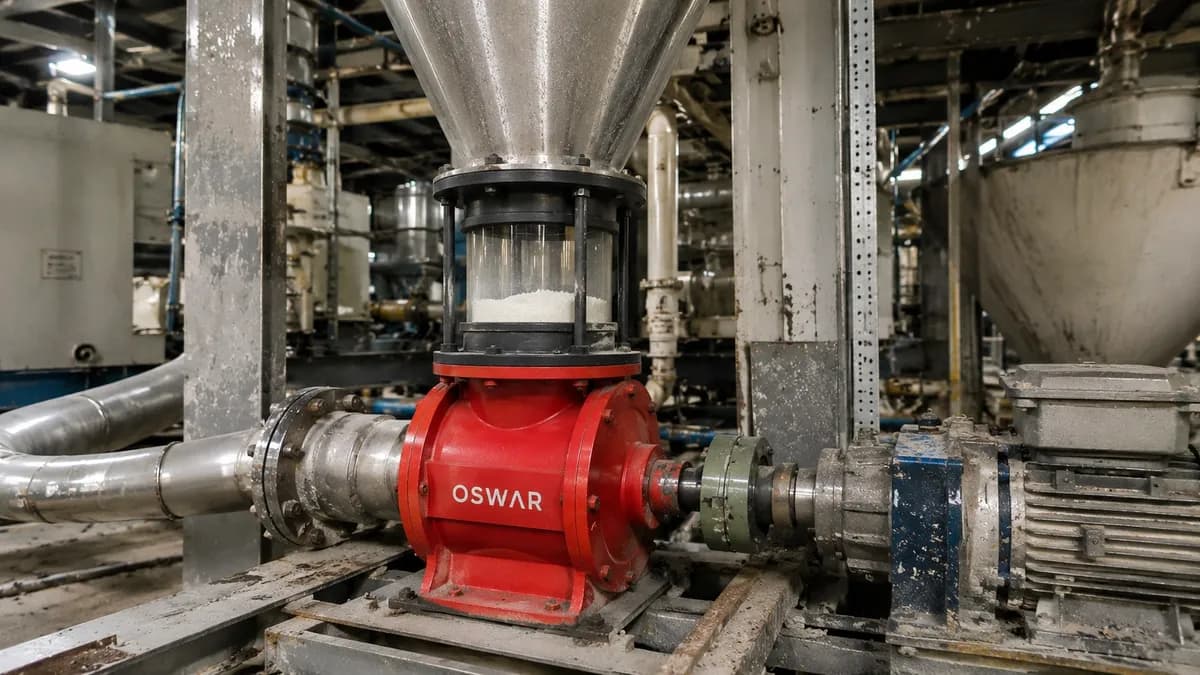
In today's fast-paced industrial world, moving bulk materials quickly and safely can make or break your production line. Whether you're running a cement plant, managing a food processing facility, or overseeing chemical powder handling, one challenge remains constant: how to transfer materials without losing product, damaging equipment, or creating costly downtime.
Many facilities struggle with material blockages, product degradation, and inefficient transfer rates that eat into profits and productivity. This is where the Blow Through Rotary Valve comes into play, a game-changing solution that's transforming how industries handle bulk materials.
These specialized valves combine the sealing capabilities of traditional rotary airlocks with enhanced conveying features, allowing materials to flow smoothly through pneumatic systems while maintaining crucial pressure differentials. By understanding how these valves work and why they're becoming the preferred choice for material handling efficiency, you can make smarter decisions that boost your operation's performance and bottom line.
What Is a Blow Through Rotary Valve and How Does It Work?
A Blow Through Rotary Valve is an advanced type of rotary feeder designed specifically for pneumatic conveying systems. Unlike standard rotary valves, these units feature a unique design that allows conveying air to pass directly through the valve housing.
The Working Principle
Here's how the process works:
Material enters through the top inlet from a hopper or silo.
Rotating vanes (typically 8 or 10) capture pockets of material.
As the rotor turns, material moves to the bottom discharge.
Conveying air flows through special channels in the valve body.
Material and air combine at the discharge point.
The mixture travels through the pneumatic transfer system.
The key difference? The blow through design includes air injection ports that allow compressed air to sweep material out of the rotor pockets more effectively. This prevents material buildup and ensures complete discharge with each rotation.
Key Components
Rotor assembly with precision-machined vanes
Housing with integrated air channels
Inlet and outlet flanges
Drive mechanism (motor and gearbox)
Sealing system to maintain pressure differential
Key Benefits of Blow Through Rotary Valves for Material Handling
Switching to a Blow Through Rotary Valve can transform your bulk material handling operation. Here are the main advantages:
1. Enhanced Material Flow
The direct air injection eliminates dead zones where material typically accumulates. This means:
No product buildup in rotor pockets
Consistent feed rates
Reduced risk of blockages
2. Improved Efficiency
By combining feeding and conveying functions, these valves:
Reduce energy consumption by up to 30%
Minimize pressure drops in the system
Allow for longer conveying distances
3. Better Product Quality
The gentle handling characteristics protect your materials:
Less degradation of fragile products
Reduced dust generation
Maintained particle integrity
4. Versatility Across Materials
Whether handling cement, food products, or pharmaceutical powders, these valves adapt to:
Different bulk densities
Various particle sizes
Both free-flowing and cohesive materials
Industry Applications: Where Blow Through Rotary Valves Excel
Different industries rely on Blow Through Rotary Valves for their unique material handling needs.
Cement Manufacturing
In cement plants, these valves handle:
Raw meal feeding
Finished cement transfer
Fly ash conveying
Limestone powder handling
Food Processing
Food processing rotary valve applications include:
Flour and grain transfer
Sugar conveying
Spice handling
Coffee bean processing
Chemical Plants
Chemical powder handling requires:
PVC resin transfer
Catalyst feeding
Pigment conveying
Detergent powder handling
Pharmaceutical Industry
Pharmaceutical powder conveying demands:
Active ingredient transfer
Excipient handling
Tablet dust collection
Sterile material processing
Plastics Manufacturing
Plastic manufacturers use them for:
Pellet conveying
Regrind handling
Additive feeding
Colorant dosing
Blow Through vs. Standard Rotary Airlock Valves: A Clear Comparison
Understanding the differences helps you choose the right valve for your pneumatic conveying system.
Feature | Blow Through Rotary Valve | Standard Rotary Airlock Valve |
Air Flow Design | Air passes through valve body | No air passage through valve |
Material Discharge | Complete pocket emptying | May retain some material |
Conveying Distance | Up to 500+ meters | Limited to 100–200 meters |
Energy Efficiency | 20–30% more efficient | Standard efficiency |
Pressure Capability | Up to 1.5 bar | Up to 1 bar |
Material Buildup | Minimal to none | Common in sticky materials |
Initial Cost | Higher investment | Lower upfront cost |
Maintenance Needs | Less frequent | More frequent cleaning |
Best For | Long-distance conveying | Short transfers, feeding only |
Critical Factors to Consider When Buying a Blow Through Rotary Valve
Making the right choice requires evaluating several key factors.
1. Material Characteristics
Particle size and shape
Bulk density
Flowability
Abrasiveness
Temperature sensitivity
2. System Requirements
Conveying distance
Transfer rate (tons per hour)
Operating pressure
Available space
Integration with existing equipment
3. Construction Materials
Choose based on your application:
Cast iron: General purpose, cost-effective
Stainless steel: Food, pharmaceutical, corrosive materials
Hardened steel: Abrasive materials
Special coatings: Specific chemical resistance
4. Design Features
Look for:
Rotor-to-housing clearances
Shaft seal type
Bearing configuration
Drive options
Safety features
5. Manufacturer Reputation
Consider factors like engineering expertise, quality standards, and after-sales support when selecting your rotary valve manufacturer.
Common Mistakes to Avoid When Selecting a Rotary Valve
Even experienced engineers can make these errors.
1. Undersizing the Valve
Don't just match your current needsplan for:
Future capacity increases
Material density variations
System pressure changes
2. Ignoring Material Properties
Failing to consider:
Moisture content effects
Temperature variations
Particle size distribution changes
3. Overlooking Maintenance Access
Ensure:
Easy rotor removal
Accessible wear parts
Clear inspection points
4. Choosing Price Over Quality
Remember:
Cheaper valves often cost more long-term
Downtime expenses exceed equipment costs
Quality affects entire system performance
5. Skipping Wear Protection
For abrasive materials, always specify:
Appropriate hard surfacing
Replaceable wear liners
Suitable rotor coatings
Maintenance Tips for Long-Lasting Performance
Proper maintenance keeps your Blow Through Rotary Valve running efficiently.
Daily Checks
Listen for unusual noises
Monitor discharge rates
Check for air leaks
Verify temperature readings
Weekly Tasks
Inspect shaft seals
Clean air vents
Check belt tension (if applicable)
Review pressure gauges
Monthly Maintenance
Lubricate bearings per manufacturer specs
Inspect rotor vanes for wear
Check housing for material buildup
Test safety interlocks
Annual Service
Replace worn seals
Measure rotor clearances
Inspect drive components
Update maintenance logs
Pro Tips
Keep spare parts on hand
Train multiple operators
Document all maintenance
Schedule downtime proactively
Why Industries Choose Oswar Rotocorp for Blow Through Rotary Valves
Leading facilities worldwide trust Oswar Rotocorp for their industrial material handling equipment needs. Here's what sets them apart.
Engineering Excellence
Oswar Rotocorp designs valves with:
Precision CNC machining for tight tolerances
Advanced CAD modeling for optimal air flow
Rigorous testing protocols
Custom solutions for unique applications
Quality Assurance
Every valve undergoes:
Material certification verification
Dimensional inspection
Performance testing
Pressure testing
Application Expertise
With decades of experience across industries, Oswar Rotocorp provides:
Expert consultation
System design support
Installation guidance
Ongoing technical assistance
Global Support Network
Customers benefit from:
Local service availability
Quick spare parts delivery
Remote troubleshooting
Training programs
Making Your Material Handling Future-Ready
The Blow Through Rotary Valve represents more than just equipmentit's an investment in operational excellence. By choosing the right valve for your pneumatic conveying system, you're setting the foundation for improved efficiency, reduced maintenance costs, and consistent product quality.
Whether you're upgrading an existing system or designing a new facility, remember these key points:
Match valve specifications to your exact needs.
Consider long-term operating costs, not just initial price.
Partner with experienced manufacturers like Oswar Rotocorp.
Plan for proper maintenance from day one.
Ready to revolutionize your material handling efficiency? Contact Oswar Rotocorp's engineering team today to discuss how their Blow Through Rotary Valves can optimize your operations. Their experts will analyze your specific requirements and recommend the perfect solution for your facility.
Contact us now for a free consultation and discover how the right rotary valve can transform your material handling system.
Frequently Asked Questions
1. What's the difference between dense phase and dilute phase conveying with blow through rotary valves?
Blow Through Rotary Valves work in both systems. Dense phase uses lower air velocity for gentle handling, while dilute phase uses higher air velocity for longer-distance conveying. The valve performs efficiently in both applications.
2. How do I calculate the correct size blow through rotary valve for my application?
Sizing depends on material flow rate, bulk density, operating pressure, and conveying distance. Adding a 20–30% safety factor is recommended. Manufacturers like Oswar Rotocorp can assist with accurate sizing.
3. Can blow through rotary valves handle hot materials?
Yes. Standard models handle temperatures up to 200°F, while high-temperature designs can operate up to 750°F with suitable materials and seals.
4. What causes premature wear in blow through rotary valves?
Abrasive materials, poor lubrication, incorrect clearances, moisture, and operating beyond design limits are the most common causes of premature wear.
5. How often should I replace the rotor in my blow through rotary valve?
Rotor life depends on the application. Non-abrasive materials may allow 5–10 years of use, while abrasive materials may require replacement every 1–3 years.
6. What's the typical pressure drop across a blow through rotary valve?
A properly sized valve usually experiences a pressure drop between 0.5 and 2 PSI. Higher values may indicate wear or incorrect sizing.
7. Can one blow through rotary valve feed multiple conveying lines?
Yes. With diverter valves and proper system design, one valve can feed multiple conveying lines efficiently.
8. What safety features should I look for in a blow through rotary valve?
Look for shear pin protection, pressure relief vents, temperature monitoring, zero-speed switches, and safety interlocks for reliable operation.
9. How do blow through rotary valves handle moisture-sensitive materials?
They perform well when used with dry conveying air. Optional purge air systems and special seals help prevent moisture contamination.
10. What's the ROI timeline for upgrading to a blow through rotary valve?
Most facilities recover their investment within 12–18 months through energy savings, lower maintenance costs, reduced downtime, and improved productivity.
